

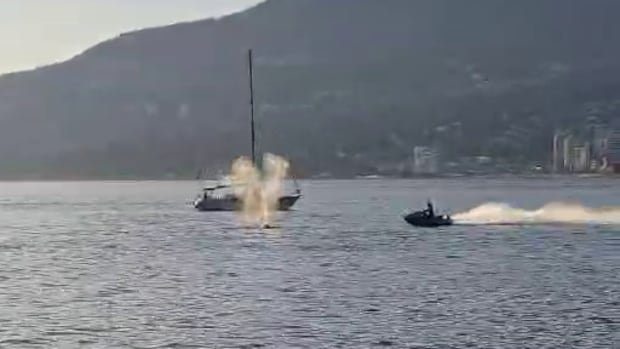

A rare sighting of a grey whale off the coast of Vancouver has been causing a stir on social media and has sparked concerns after it was hit by a Sea-Doo operator on Monday. Both Fisheries and Oceans Canada (DFO) and Vancouver police are currently investigating the incident, but authorities have mentioned that the whale seems unharmed and is behaving normally post-collision.
This event follows a series of notable whale collisions last autumn, a matter that conservationists highlight as a growing issue. Understanding the potential for conflicts on the water is crucial in such circumstances.
Federal Marine Mammal Regulations stipulate that vessels must maintain a distance of at least 100 meters from all whales, dolphins, and porpoises, or 200 meters if there is a calf present. Specific distances are required for orcas in southern B.C. coastal waters, with further restrictions coming into effect for southern resident killer whales starting June 1.
In terms of regulations enforcement, various authorities such as local police, port patrol, and the RCMP oversee general marine safety in the waters off Vancouver. DFO is responsible for enforcing Marine Mammal Regulations, the Species At Risk Act, and the Fisheries Act, with a dedicated whale protection unit in B.C. tasked with educating boaters and ensuring compliance with regulations.
Violators can face significant fines under the Fisheries Act, but gaps in the regulations remain a concern, according to spokesperson Jackie Hildering. The process of charging suspects and establishing intent in court proceedings poses challenges, especially given the vast coastline of British Columbia.
The local whale population faces pressure, with humpbacks classified as a species “of special concern,” while orcas continue to be threatened despite some improvements. The endangered southern resident killer whales are particularly at risk due to various factors impacting their habitat and food sources.
The impact of ship strikes on whales is a pressing issue, with documented cases representing only a fraction of the actual occurrences. Efforts to reduce conflicts include programs like the ECHO initiative by the Port of Vancouver and the Whale Report Alert System developed by Ocean Wise.
Enhancing enforcement resources and public education, especially concerning interactions between recreational boaters and whales, are seen as critical solutions to mitigate conflicts. The Marine Education and Research Society offers a free Whale Safe Boating Course to promote a culture of safe boating practices around marine mammals.