

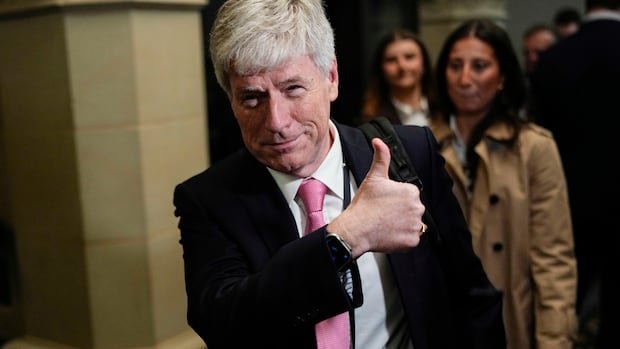

Canada’s Minister of Energy stated that public funds could be utilized for Alberta’s proposed bitumen pipeline to the Pacific Coast through the federal government’s Indigenous loan guarantee program. During a session with the House of Commons natural resources parliamentary committee, Energy Minister Tim Hodgson clarified that they would back Indigenous equity ownership within the Indigenous loan guarantee program.
The Indigenous loan guarantee program, a $10-billion initiative, aims to facilitate Indigenous ownership in natural resource and energy projects. Hodgson mentioned that there might be circumstances where public funds could support Indigenous ownership of a pipeline, in response to a query from a Bloc Québécois MP.
Recent discussions have emerged regarding financial contributions to another pipeline as the federal and Alberta governments work on finalizing details outlined in a memorandum of understanding (MOU) signed by both parties in November. According to reports from Bloomberg, an agreement on industrial carbon pricing is anticipated to be reached within the next two weeks.
Sources from The Globe and Mail and The Toronto Star have also indicated that the Carney government is contemplating a Pacific Coast pipeline that would run further south than the preferred northern route by Alberta Premier Danielle Smith. Hodgson’s statements align with the MOU’s language, indicating that the private sector would handle construction and financing with Indigenous ownership and economic benefits. The agreement also suggests that public funds channeled through the Indigenous Loan Guarantee Corporation could be used to support Indigenous co-ownership.
Despite potential controversy, such actions are unlikely to contravene federal guidelines seeking to phase out inefficient fossil fuel subsidies. These guidelines permit federal funding for projects that promote Indigenous economic involvement in fossil fuel activities, in line with efforts to enhance self-determination.
However, Environmental Defence believes that such a move would defy the spirit of these guidelines, which were intended to direct more federal resources towards reducing pollution contributing to climate change. According to Julia Levin, the national climate associate director at Environmental Defence, Canadians have expressed opposition to their tax dollars supporting one of the world’s wealthiest sectors. The government, led by Prime Minister Mark Carney, is accused of undermining its own regulations by financing projects that jeopardize the economy and present and future safety.