

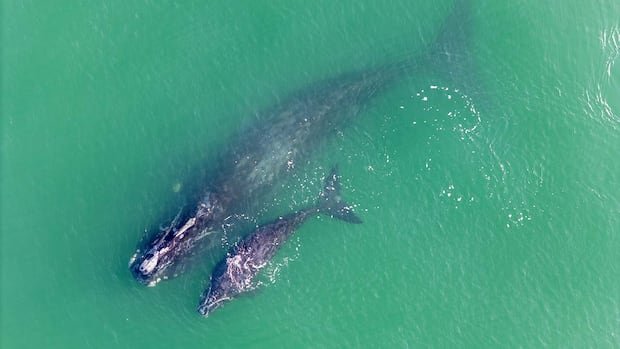

North Atlantic right whale experts on both sides of the border are expressing cautious optimism following an increase in the number of newborn calves this year. A total of 23 calves were born during the calving season from November to April off the southeastern U.S., marking the highest tally since 2009.
Amy Warren, a scientific program officer at the New England Aquarium’s Anderson Cabot Center for Ocean Life, described the 23 calves as a positive sign, emphasizing the importance of their survival to contribute to the endangered population of North Atlantic right whales, which currently stands at only 380 individuals.
The reasons behind the surge in calf births this year remain unclear, although experts point to the health of the mothers as a significant factor. The availability of food sources, impacted by climate change pushing the whales’ plankton prey further north, plays a crucial role in the well-being of the mothers and their ability to sustain themselves during the calving and nursing periods.
Various human-induced stressors, such as ocean noise, vessel traffic, and entanglements in fishing gear, also pose threats to the health of North Atlantic right whales. Conservation efforts, including fishery closures and speed restrictions for marine vessels, have been implemented in both Canadian and U.S. waters to protect these marine mammals.
In addition to the rise in calf numbers this year, researchers noted a shorter interval between births for some mothers, indicating improved reproductive health within the population. The presence of younger mothers and experienced females like Ghost and Juno, who have each given birth to at least nine calves, contributes to the overall positive outlook for the species.
While the recent baby boom is seen as a positive development, experts stress the need for sustained efforts to reverse the decline in the North Atlantic right whale population. Observations of the whales moving into Canadian waters, including the Gulf of St. Lawrence, signal potential opportunities for further research and conservation initiatives.
Despite the encouraging increase in newborn calves, researchers emphasize the ongoing challenges faced by the endangered species and the necessity of continued conservation measures to ensure their long-term survival and population recovery.