

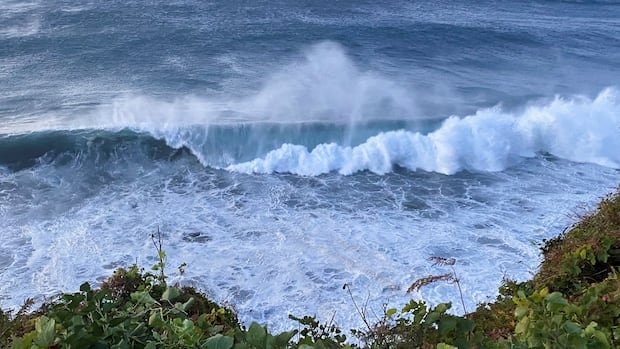

In the film “The Day After Tomorrow,” global weather patterns are disrupted as a vital Atlantic Ocean current suddenly ceases. The movie depicts catastrophic events such as tornadoes in Los Angeles, coastal flooding in New York, and a deadly deep freeze across the Northern Hemisphere.
While the movie falls into the genre of cli-fi (climate fiction), its premise is loosely rooted in actual scientific concepts concerning the Atlantic Meridional Overturning Circulation (AMOC). This ocean conveyor belt system transports warm water from the southern Atlantic to the north, where it cools and sinks, influencing Europe’s climate.
Scientists are concerned about the potential collapse of the AMOC due to climate change. Rising global temperatures and ocean temperatures impact the AMOC’s functioning. As the Atlantic warms, its water becomes less salty, affecting the sinking process crucial for the circulation.
Research indicates that the AMOC is already showing signs of slowing down, though there is debate among scientists about the extent of this slowdown. Various studies have examined the potential consequences of an AMOC slowdown, with predictions ranging from a 30% to 50% decrease by the end of the century.
Experts emphasize that a significant slowdown in the AMOC could lead to repercussions such as sea level rise, colder weather in Europe, and shifts in global weather patterns. However, while the scenario in “The Day After Tomorrow” exaggerates these effects, the real-world impacts would still be severe.
The potential implications of an AMOC slowdown include cooling temperatures in Europe, with estimates suggesting winter temperatures could drop significantly. Furthermore, countries like Canada could experience rising sea levels along their coasts, impacting communities and infrastructure.
Despite concerns about the AMOC’s stability, scientists are forecasting a slowdown rather than a complete shutdown in the foreseeable future. While a slowdown would not halt global warming, it could temper temperature increases to some extent.
In conclusion, experts urge awareness of the real risks associated with climate change and the potential impacts of disruptions to crucial ocean currents like the AMOC. The need for education and action to mitigate these risks and safeguard future generations is paramount.