

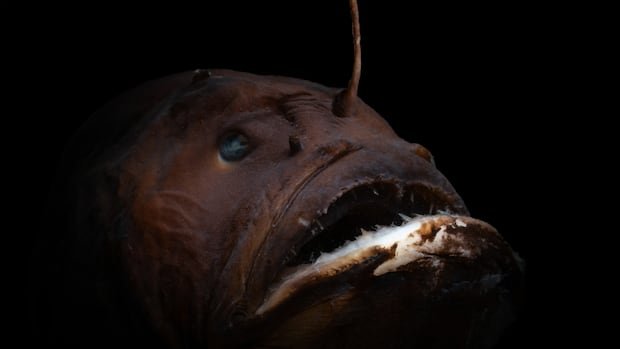

In a recent study published in the journal Ichthyology and Herpetology, researchers have unveiled new insights into the fascinating behavior of female anglerfish. These deep-sea creatures are known for using their distinctive forehead lures to attract prey. However, the study suggests that these lures may serve a dual purpose by also acting as beacons for male anglerfish seeking mates in the ocean’s depths.
Lead author Alex Maile, a biologist, describes anglerfish as a combination of beauty and terror, likening them to “beauty and the beast.” The research, based on DNA analysis of over 100 anglerfish species, highlights how different types of lures have evolved to enhance reproductive success over time.
Marine biologist Milton Love, not involved in the study, commends the novel theory proposed by the authors, challenging traditional beliefs about anglerfish behavior. The study’s findings indicate a significant diversity of anglerfish species, each with unique variations in their lures, which prompted Maile to delve further into this evolutionary phenomenon.
Maile, along with colleague Matthew Davis, conducted a comprehensive analysis mapping out the evolution of anglerfish lures. Their research, utilizing fossil evidence and computer modeling, reveals that bioluminescent lures emerged approximately 23 to 34 million years ago, coinciding with a surge in anglerfish diversity driven by natural selection.
Male anglerfish, significantly smaller than females and lacking their own lures, rely on sensory cues like bioluminescence to locate potential mates. Once sexually mature, males cease feeding and embark on a quest to find a female for reproduction, emphasizing the critical role of lures in their mating behavior.
While glowing lures are not unique to anglerfish, with other deep-sea species employing similar strategies, the study sheds light on the evolutionary significance of bioluminescence in anglerfish mating rituals. Despite the seemingly morbid nature of anglerfish reproduction, with males fusing with females after mating, Love emphasizes that this process fulfills their ultimate purpose in life.
Overall, the research underscores the intricate adaptations and behaviors of anglerfish, showcasing the remarkable evolutionary journey that has shaped these enigmatic creatures in the depths of the ocean.