

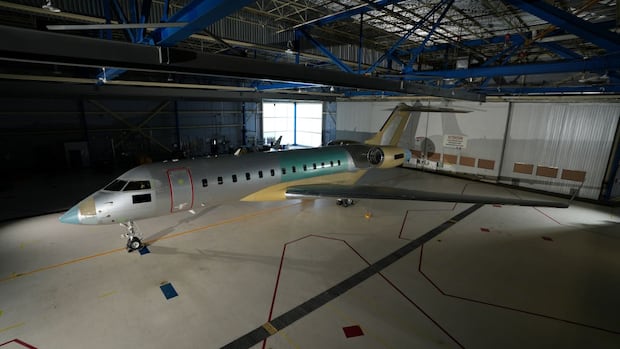

A major contender in the race to sell Canada early warning surveillance aircraft has expressed surprise at Prime Minister Mark Carney’s decision to enter contract talks with the European defense firm Saab.
Three companies — two from the United States and one from Sweden — were vying to supply the air force with six Airborne Early Warning and Control (AEW&C) aircraft, deemed crucial for Arctic monitoring.
L3Harris Canada, a branch of U.S.-based L3Harris Technologies, proposed the Aeris X, which utilizes a Bombardier 6500 business jet airframe. Saab’s offering, the GlobalEye, employs both the Bombardier 6000 and 6500 airframes.
“We were genuinely taken aback,” remarked L3Harris Canada’s vice-president Rich Foster during a recent conversation with CBC News and Radio-Canada.
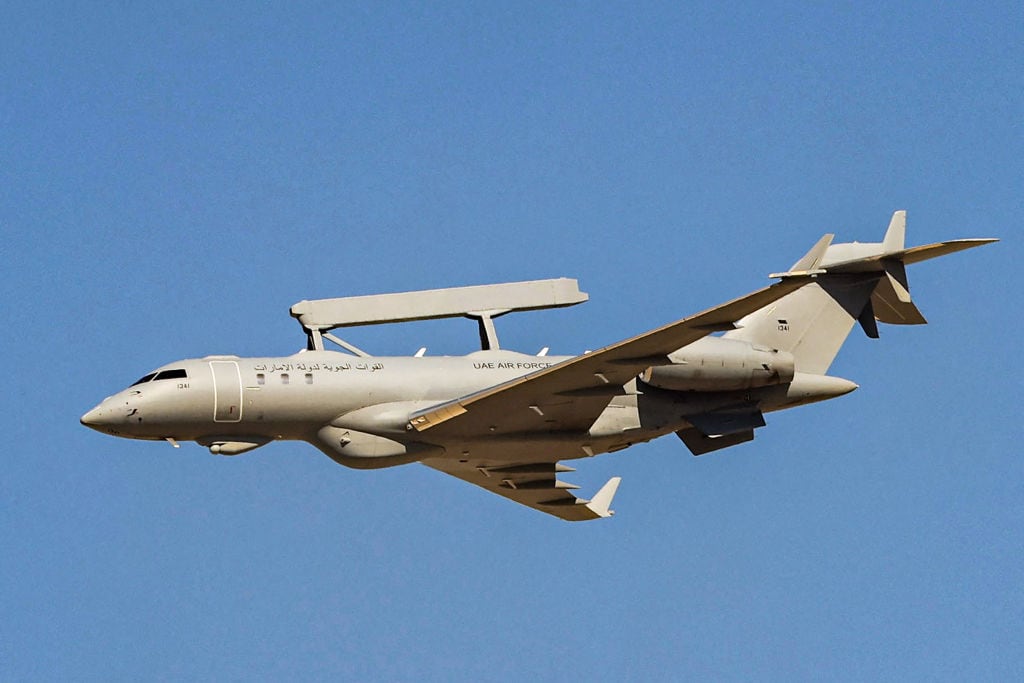
A Saab GlobalEye is displayed at the Dubai Airshow in 2021. Canada is presently negotiating with the Swedish firm for the aircraft’s purchase for military use. (Giuseppe Cacace/AFP/Getty Images)
The announcement that Saab would be the preferred supplier for the early warning aircraft was made by the prime minister at a significant defense industry trade show in Ottawa at the end of May.
In line with Carney’s commitment to expedite defense procurement, the initiation of negotiations with Saab bypassed many standard purchasing protocols. This included the usual request for information (RFI), which serves as a preliminary inquiry to determine which companies can meet the air force’s requirements.
“We expected that an RFI would be released and that a competition would unfold, revealing all necessary information for Canada to make a well-informed choice,” stated Foster, who retired from the military a decade ago as the deputy commander of the Royal Canadian Air Force after a 35-year career.
“We certainly respect the decision made by Canada. Whatever the final choice is, we will accept it. However, we would still appreciate the opportunity to communicate with the government to express that we have an alternative solution should negotiations not proceed as planned.”
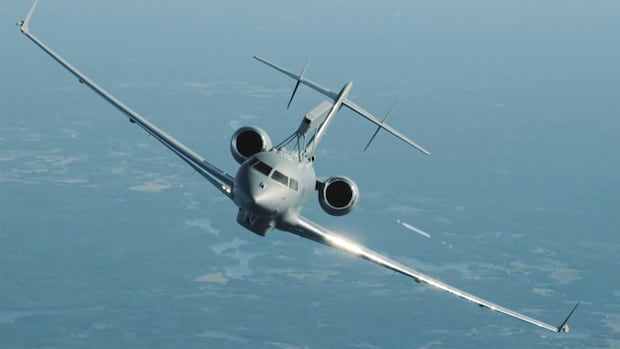
Experts caution that Ottawa’s choice to acquire the Saab GlobalEye surveillance jet may incite a new U.S. political controversy, as fully integrating the aircraft with NORAD would necessitate U.S. stealth communications technology that has not previously been shared.
From a technical standpoint, Foster asserted that the Aeris X would seamlessly integrate with both the North American Aerospace Defense Command (NORAD) and NATO defense networks due to the company’s access to U.S. technology.
“Our radar capabilities provide complete 360-degree coverage, eliminating any potential gaps,” Foster explained.
“Moreover, we have access to vital fifth-generation and sixth-generation components that would need to be integrated to deliver the stealth capabilities essential for maintaining operational effectiveness, while also providing the necessary intelligence,” he added.
Those critical of the GlobalEye contend that the Swedish-made aircraft will encounter both political and technological challenges to effectively share data with the F-35 fighters it would be tasked with controlling over North America.
‘An alternative solution’
Saab believes these challenges are manageable and that the missing technology can be integrated if Canada requests access to Multifunction Advanced Data Link (MADL) terminals from the Trump administration, which is proprietary to Lockheed Martin. Defense analysts indicate that this would be a difficult proposition in Washington until more allied nations adopt the GlobalEye.
Foster claims that L3Harris does not face these complications.
Interestingly, he pointed out that the company has not yet received the full list of requirements from the air force regarding the early warning aircraft.
“We have communicated to the Royal Canadian Air Force that we can deliver by 2032,” Foster stated. “Depending on the requirements, that timeline could potentially be accelerated.”
L3Harris MAS, another division of L3 Harris Technologies, is collaborating with Lockheed Martin to establish a heavy maintenance and sustainability facility for Canada’s F-35s in Mirabel, located near Montreal.
-
Ottawa’s mixed fleet of F-35s and Gripens could total more than 100 aircraft, sources say
-
Pentagon doubles down on Canada rebuke with demand for NATO spending road map, F-35 decision
The company conducted a separate analysis of the possible economic impact from both the F-35 maintenance facility and the anticipated sale of the Aeris X to Canada.
According to Foster, the early warning aircraft alone would generate 1,100 jobs at the Mirabel facility over a duration of 22 years.
Wendy Gilmour, a Canadian and former assistant secretary general for defense investment at NATO, remarked that the federal government opted to negotiate with Saab because the GlobalEye is already operational with other allied nations.
While modifications are necessary, she noted that it represents the quickest route to provide capabilities to the air force.
“It’s a proven capability that can be delivered more swiftly than initiating a new process to integrate various technologies,” Gilmour explained, referencing the limited development occurring with the Aeris X.
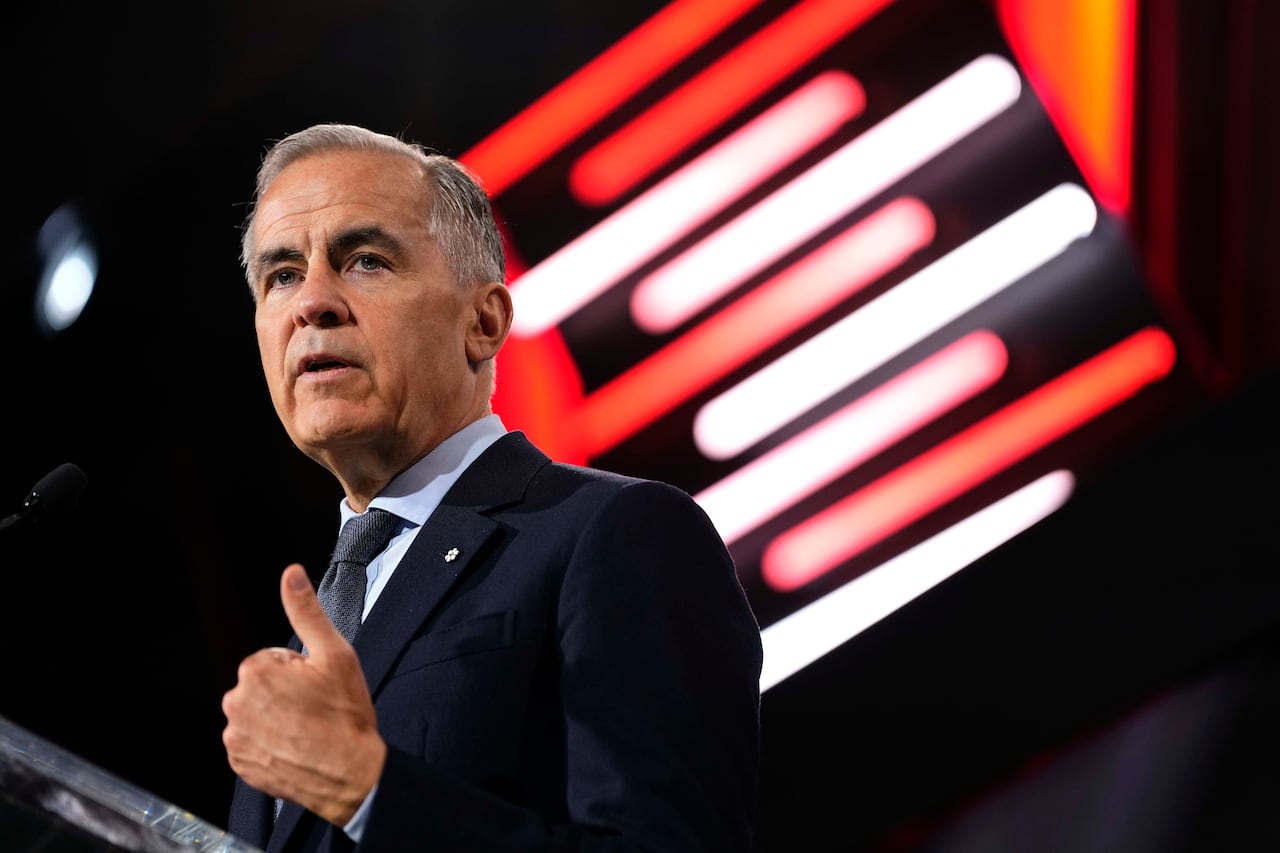
Prime Minister Mark Carney announced the GlobalEye deal at the CANSEC trade show in May. (Justin Tang/The Canadian Press)
L3Harris is currently in the process of deploying its surveillance aircraft in South Korea and has another undisclosed client.
Several federal officials have privately acknowledged that the immediate availability of a proven aircraft influenced the decision to expedite the GlobalEye acquisition. Additionally, the prospect of manufacturing jobs linked to building the aircraft in Canada was a significant factor, as this defense initiative aligns with the “national economic interest” of enhancing the country’s defense-industrial base.
The Liberal government is currently advancing legislation to establish the Defence Investment Agency (DIA). Bill C-31, an omnibus piece of legislation containing various measures, including the DIA, is set to be reviewed by a Commons committee this fall.
However, the measures related to the agency aim to broaden the scope of the Defence Production Act to encompass economic security within the definition of national security.
-
All for one: Norway, Germany sell Canada on shared submarine fleet
-
South Korea’s Hanwha showcases submarine as Ottawa mulls multibillion-dollar contract
If the federal government intends to bypass the standard procurement procedures, as seen with the GlobalEye and the larger submarine acquisition, there are currently four exceptions under existing law.
Once enacted, Bill C-31 will introduce 14 exceptions, providing the government with increased flexibility to navigate a system that has long faced criticism for being overly complex.
The list of permissible exceptions includes provisions that allow for the suspension of rules if a project “is warranted to support a sector of the Canadian economy that is crucial to national defense or national security, encompassing economic security.”
By advancing the GlobalEye procurement at this time, the federal government appears unconcerned about having legislative support and could potentially justify the sole-source selection retroactively.
“In an ideal situation, would you engage the industry and promote competition for everything? Absolutely. However, that approach entails significant risks regarding timelines, as well as potential costs and capabilities,” Gilmour remarked.