

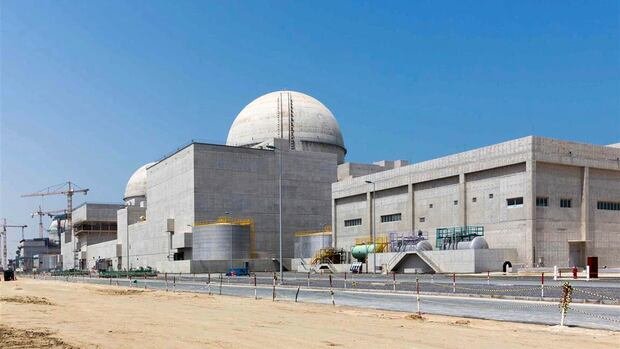

A fire erupted at a nuclear power plant in the United Arab Emirates due to a drone strike, as confirmed by Abu Dhabi officials on Sunday. This incident occurred amidst ongoing challenges in resolving the conflict between the U.S. and Israel with Iran, and restoring shipping activities in the Gulf region.
Although Emirati authorities did not assign blame for the attack, no group immediately claimed responsibility. Previously, the U.A.E. has accused Iran of targeting its energy facilities as part of escalating tensions in the area.
The drone strike impacted an electrical generator located outside the main perimeter of the Barakah Nuclear Power Plant, according to the Abu Dhabi Media Office. Thankfully, radiological safety measures and plant operations were unaffected, with no reported injuries.
The International Atomic Energy Agency stated that it is closely monitoring the situation.
Throughout the conflict that commenced with U.S. and Israeli actions against Iran on February 28, Iran has repeatedly targeted the U.A.E. and neighboring Gulf nations that host U.S. military installations. These attacks have hit various sites, including civilian and energy infrastructure.
Following U.S. President Donald Trump’s announcement of a naval mission to reopen the Strait of Hormuz earlier this month, Iran intensified attacks on the U.A.E. However, Trump later suspended this mission after 48 hours.
Despite a ceasefire in place for over five weeks, diplomatic efforts to reconcile U.S. and Iranian demands have not bridged the significant gaps. The stalemate persists, with Washington calling for Iran to dismantle its nuclear program and release control of the strait, while Iran seeks compensation for damages, an end to the U.S. blockade on its ports, and cessation of hostilities in various regions, including Lebanon.
President Trump, following discussions with Chinese President Xi Jinping that did not yield support for resolving the conflict, has threatened to resume attacks if Iran does not agree to terms.
Iranian armed forces spokesperson, Abolfazl Shekarchi, warned of aggressive responses if Trump’s threats materialize, while Iranian foreign ministry spokesperson Esmaeil Baqaei accused the U.S. and Israel of destabilizing energy markets through unprovoked military actions.
The disruption in shipping at the vital Strait of Hormuz has led to a historic oil supply crisis, driving up prices. The U.S. has enforced its blockade of Iranian ports, further exacerbating the situation.
Ebrahim Azizi, chair of Iran’s national security committee, disclosed plans to introduce a traffic management system for the strait soon. The conflict has resulted in significant casualties, with thousands of Iranians perishing in U.S. and Israeli airstrikes, and further loss of life in Lebanon due to clashes between Israel and Hezbollah, a group backed by Iran.
Israel and Lebanon recently agreed to a 45-day extension of a ceasefire, though tensions persist without a complete cessation of hostilities.