

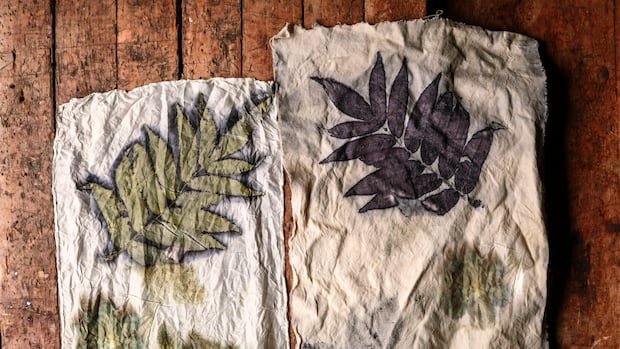

When iron, plants, and fabric come together, a unique transformation occurs through a process known as bundle dyeing. This technique involves placing botanicals onto fabric treated with a mordant, such as iron or aluminum, and then steaming the fabric to release the pigments from the plants.
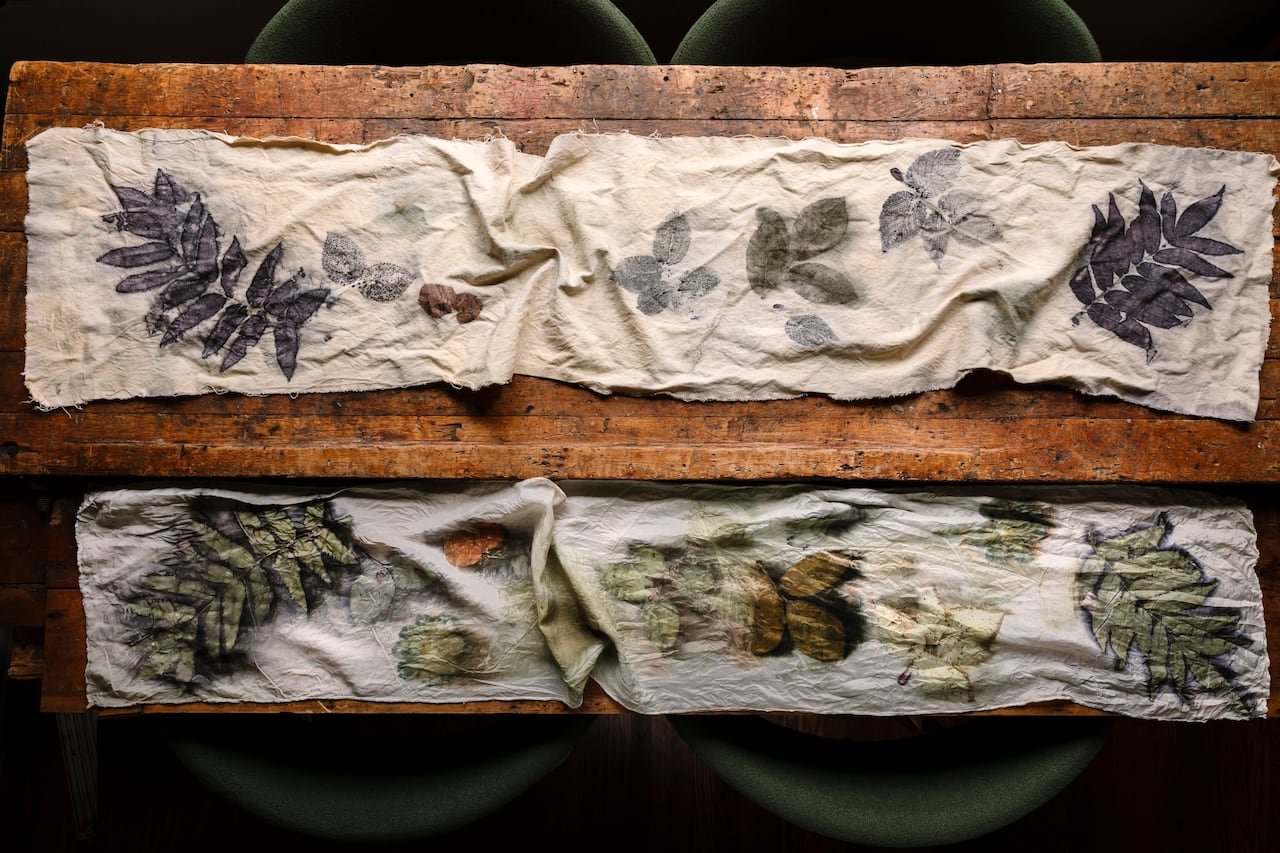
Bundle dyeing results in captivating halos, deep smoky tones, and accentuates the intricate details of the foliage. The varying shades of soft rings and shadows, ranging from subtle greys and olives to charcoal, brown, or black, depend on factors like the plant type, mordant used, iron concentration, moisture levels, and bundling techniques.
The choice of fabric also plays a significant role in the final outcome: silk creates gentle outlines with subtle halos, while cotton yields sharper silhouettes.
Typically, the fabric treated with iron (in this case, cotton) is a intermediary step in the process and not the final product. However, the author was so impressed with the results on the cotton fabric that both fabrics were repurposed as table runners.
Important to note: The equipment used in this dyeing process may not be suitable for food-related purposes afterwards, so it is advised to use items that won’t be used for cooking or to purchase dedicated dyeing supplies from thrift stores or discount stores.
Foliage:
(Feel free to experiment with other safe botanical options.)
- Sumac leaves
- Rose leaves
- Cosmos leaves and flowers
- Berry leaves (from brambles like raspberries and blackberries)
- Dill flowers
Materials:
- Silk runner, 12 by 60 inches
- Dish soap or pH-neutral liquid soap
- 100% cotton cloth, approximately 12 by 60 inches (An old bedsheet is suitable.)
- A plastic sheet, 13 by 61 inches (A sturdy recycling bag was used in this case.)
- Large stainless steel pot
- Steamer basket
- Ferrous sulphate (iron)
- Large plastic container for soaking fabrics
- Cotton twine or strips of cotton rags for bundling (a 1-meter-long cotton strip was used)
- Wooden dowel (around 13 inches long)
- Waterproof gloves like rubber or latex-free
- Mask
(Betty Shin Binon)
Step 1: Cleaning the silk and cotton
Prepare a large container with warm water and add mild dish soap or pH-neutral liquid soap.
Soak the silk and cotton fabrics in the soapy water for about 20 minutes, gently agitating them at intervals. Rinse thoroughly, lightly wring out excess water, and hang the fabrics to air-dry until slightly damp. (If completely dry, dampen them with lukewarm water.)
Step 2: Preparing the iron-treated cotton
(The cotton fabric is utilized to transfer more defined