

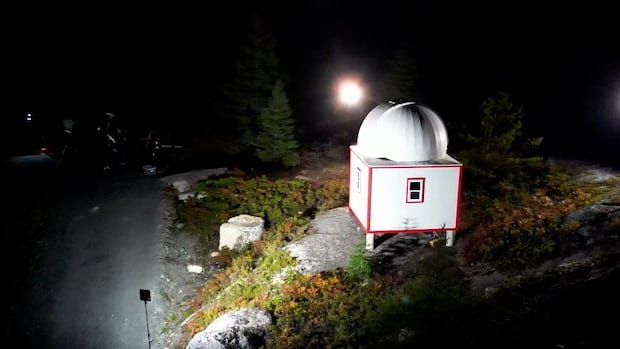

Some residents in the Halifax area are opposing a proposed stargazing park in their neighborhood, expressing concerns that the project could disrupt their peaceful way of life. However, the owner of the development argues that the scope of the project is being exaggerated.
In January, Halifax councillors from the North West Community Council approved a development agreement for a stargazing facility to be located in a rural residential area near Big Lake off Prospect Road, close to Peggys Cove. The agreement includes plans for an observatory, already established, along with 12 rental cabins, 12 bunkhouses equipped with telescopes, 20 tenting sites, a café, boathouse, walking trails, and a 15,000-square-foot lodge featuring a hall, washrooms, and a kitchen available for event rentals. Additionally, one of the cabins may be converted into two recreational vehicle sites.
A resident named Adi Fleisher, who resides near the site and has been living there since 2019, initially welcomed the project but later grew concerned about its size and impact. Fleisher appealed the community council’s decision to the Nova Scotia Regulatory and Appeals Board, citing flaws in the traffic impact study and insufficient consideration of environmental effects.
Fleisher expressed worries about the visibility of the observatory and upcoming structures from her property, highlighting issues such as light beams entering her living room from flashlights on the site and noise disturbances. She emphasized her family’s desire for a peaceful natural environment.
The appeal submitted by Fleisher urges the board to review Halifax’s planning policies in relation to the project and either send the development agreement back for further assessment or reject it outright. A petition accompanying the appeal garnered support from 269 individuals residing in surrounding communities.
John Read, the astronomer spearheading the Stargaze Nova Scotia initiative, emphasized during a hearing that the project aims to promote education and eco-friendly tourism. He clarified that the observatory’s operations are overseen by a nonprofit organization focused on educating science teachers about telescopes.
Despite concerns raised by neighbors, Read assured that the project intends to maintain the area’s tranquility and comply with noise regulations. The development’s design considers the natural environment’s sensitivity, with structures strategically placed on granite barrens, a buffer along Big Lake, and a significant wetland area.
The project currently lacks secured funding, but Read plans to seek a combination of private and government support, including potential partnerships with local universities and agencies like the Canadian Space Agency. The board anticipates delivering a decision by the end of September, with the project potentially proceeding in stages if the appeal is unsuccessful.