


The first official report from a U.S. government oversight body has been released regarding the impact of the conflict with Iran. The report acknowledges deficiencies in advanced military weaponry and provides a detailed account of the damage sustained by American aircraft, bases, and diplomatic facilities in the Middle East.
According to the Pentagon inspector general’s report published on Monday, the ongoing conflict, known as Operation Epic Fury, had incurred costs amounting to $33.4 billion as of June 29. However, Secretary of War Pete Hegseth testified before Congress in late July that the total expenditure had reached $37.5 billion by that time.
The report highlights strategic inventory shortages and industrial bottlenecks for munitions resupply in relation to advanced weapons resulting from the U.S. war with Iran. It is projected that it will take approximately three years for military contractors to restore advanced missiles and defensive interceptors to pre-war levels.
Despite reports of munitions shortages, the Pentagon has consistently refuted such claims, asserting that the U.S. military possesses an ample supply of weapons for any conflict. President Donald Trump emphasized in a recent social media post that the U.S. is currently manufacturing more sophisticated and high-quality weapons than ever before.
The report also reveals that Iranian strikes caused extensive damage to numerous American facilities in various countries, including Kuwait, Bahrain, Qatar, the United Arab Emirates, Saudi Arabia, Iraq, Oman, and Jordan. Notably, the U.S. naval base in Bahrain was targeted by Iranian drones and ballistic missiles, prompting U.S. Central Command to reroute supply lines to more distant locations such as Diego Garcia.
Furthermore, the report discloses that U.S. diplomatic buildings in Kuwait, Saudi Arabia, the United Arab Emirates, and Iraq suffered significant physical damage from the attacks, resulting in costs amounting to $184 million. Additionally, construction projects at several U.S. outposts in countries like Israel, Egypt, and Oman experienced delays due to the conflict.
The report also touches on the evacuation efforts carried out by the State Department, which involved relocating around 9,000 U.S. citizens from the Middle East and Europe following the initial strikes on Iran. These evacuation operations incurred expenses exceeding $11 million as of late June, with a significant portion of evacuees originating from Israel.
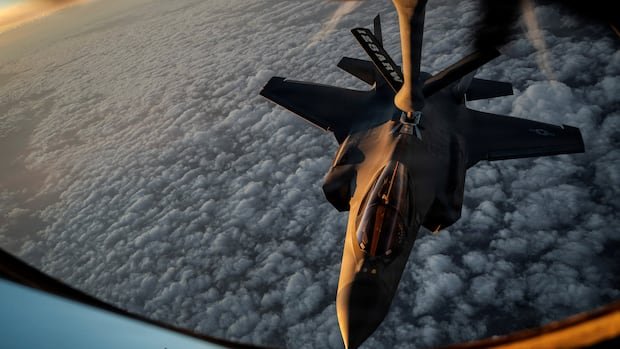
Regarding weaponry, the report indicates that a substantial number of American aircraft and drones were either destroyed or damaged by Iranian actions. Notably, up to 30 MQ-9 Reaper drones, each costing approximately $30 million, were lost, along with seven KC-135 refueling aircraft. Tragic incidents such as a KC-135 crash in Iraq resulting in six fatalities and the death of a helicopter pilot in the Arabian Sea were reported as non-hostile events.
In response to the conflict, emergency and non-emergency military sales totaling over $44 billion were conducted during the specified period, with a significant portion of the sales directed towards Saudi Arabia. Military equipment, munitions, and precision weapons systems were among the items sold to various regional countries impacted by the conflict.
Overall, the report provides a comprehensive overview of the challenges and costs associated with the ongoing conflict with Iran, shedding light on the extensive damage incurred by U.S. military assets and diplomatic infrastructure in the region.