

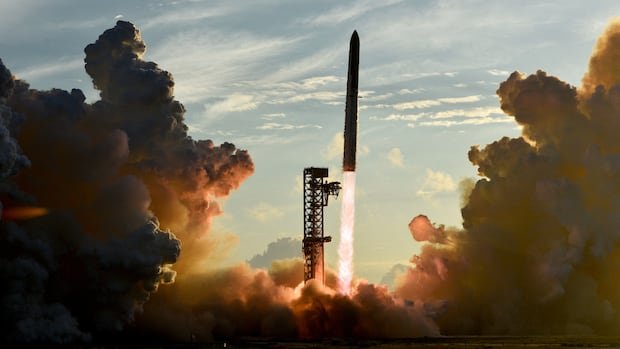

SpaceX’s Starship successfully launched into orbit, deploying advanced Starlink satellites before cutting the flight short, landing in the Pacific Ocean after three hours. Originally planned for a 10-hour journey to showcase readiness for NASA’s Artemis moon program, the spacecraft faced an engine shutdown shortly after liftoff. Despite the setback, flight controllers proceeded as planned, announcing, “Starship is orbital.”
The rocket carried 26 new Starlink satellites, joining the existing 11,000, and released them to cheers from onlookers at Starbase, Texas. Following the successful deployment, the flight was ended abruptly, with no explanation provided. This marked Starship’s 14th launch from Texas in three years, a significant advancement from previous test flights.
SpaceX’s goal was to complete six orbits around the Earth before splashing down near Chile but opted for an earlier return for safety reasons. The first-stage booster was not planned to return to the launch site, dropping into the Gulf of Mexico post-launch. SpaceX aims to ensure a safe return for future flights, emphasizing caution to prevent debris incidents.
The company plans to refine the landing process by using mechanical arms to catch the spacecraft, potentially allowing for a relaunch by year’s end. Starship’s design focuses on reusability to reduce launch costs, with the last spacecraft salvaged from the Indian Ocean aiding in modifications for future missions.
Certifying Starship for orbital flight is crucial for SpaceX’s lunar and Mars exploration ambitions. NASA’s upcoming Artemis III mission involves multiple spacecraft interactions in orbit, leading to potential moon landings with either Blue Moon or Starship. Musk envisions Starship’s role in satellite deployment and lunar missions, aiming to phase out the Falcon 9 rocket in the coming years.
The next mission, Artemis IV, aims for moon landings, alternating between Blue Moon and Starship for future lunar expeditions. While Mars remains a long-term goal, SpaceX’s immediate focus lies on lunar missions and enhancing space travel capabilities. Additional launch sites in Florida and Louisiana are in the works to support upcoming missions.