

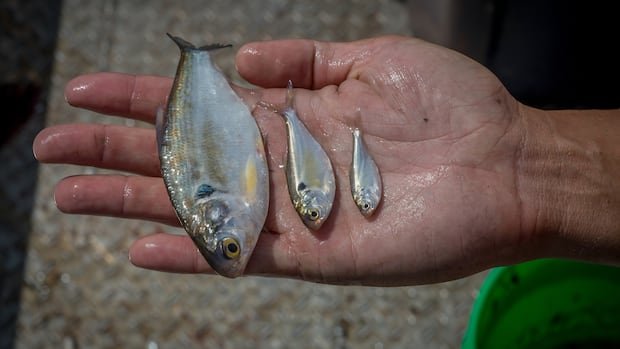

Almost two years following an unusual incident involving a large number of fish at the primary nuclear power plant in Canada, recent documents reveal the exceptional nature of the event. Experts are cautioning that unique ecological circumstances are posing an increasing challenge for nuclear facilities globally.
In February 2025, a massive quantity of gizzard shad inundated the cooling systems at the Bruce Nuclear Generating Station in Tiverton, Ont., resulting in the shutdown of one reactor, a power reduction in another, and dead fish strewn along Lake Huron’s shoreline for several days. Obtained federal and provincial records, totaling over 1,200 pages, shed light on how an environmental phenomenon related to a small, cold-sensitive fish pushed the limits of Canada’s largest nuclear plant in unforeseen ways.
Bruce Power, the private entity managing the plant, opted not to participate in a broadcast interview but later issued a written statement without addressing specific inquiries from CBC News.
The investigation by Bruce Power revealed that the plant encountered “a novel environmental event,” while the Canadian nuclear regulator described an unexpected influx of gizzard shad, overwhelming the plant’s defense mechanisms meant to prevent fish from entering the cooling water system.
A separate inquiry by the company in June 2025 found that the fish incidents on February 1 and 13 posed a challenge to reactor safety. Experts such as David Novog, a professor specializing in Nuclear Safety at McMaster University, emphasized that any threat to reactor safety typically indicates a reduction in the effectiveness of the plant’s defense layers, necessitating a shutdown.
Douglas Boreham, a former principal scientist at Bruce Power, reassured that the reactors responded as intended to the cooling system disruption, emphasizing that despite operational impacts, there was no compromise to reactor safety.
The Canadian Nuclear Safety Commission (CNSC) warned in an April 2026 report of potential severe consequences following the disruption of cooling systems serving two active reactors at Bruce Power, leading to the shutdown of Unit 2 and power reduction in Unit 1.
An estimate provided by Bruce Power to Fisheries and Oceans Canada in March 2026 revealed a staggering count of 8.1 million gizzard shad in the vicinity of Bruce A on a single day in February 2025, surpassing previously disclosed figures. The report linked the fish influx to harsh winter conditions, causing cold shock among the fish and driving them towards the warm water discharged by the nuclear plant.
The incident at Bruce Power underscores a broader trend of environmental factors impacting nuclear plant operations worldwide. Experts have observed similar occurrences disrupting cooling systems in other countries like Romania and France, signaling the necessity for nuclear facilities to adapt to changing environmental conditions amid their crucial role in combating climate change.
Following the event, Bruce Power has invested nearly $10 million in mitigation efforts and research to prevent future disruptions caused by mass fish influxes. The plant has bolstered its defenses, introducing new physical barriers, acoustic deterrents, monitoring systems, and artificial intelligence tools to detect and deter large fish populations from approaching the cooling water intakes.
As nuclear power plants play a critical role in supplying low-carbon electricity, the focus on preventing disruptions like the fish event at Bruce Power will be paramount in ensuring the continuous and reliable operation of these facilities in the future.