

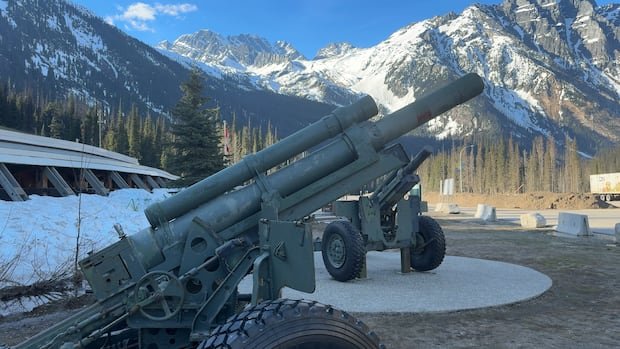

The Canadian Armed Forces have decided to discontinue the avalanche-control program in Rogers Pass, B.C., after the upcoming winter season. This program, operated under an agreement between the Department of National Defence (DND) and Parks Canada, has been in place for over 70 years. The purpose of Operation Palaci is to trigger controlled avalanches to prevent dangerous ones that could impact the Trans-Canada Highway and railway.
Recognized as the longest-running Forces operation in Canada’s history, Operation Palaci is managed by the DND and is also the world’s largest mobile avalanche control program. The memorandum of understanding for this operation is set to expire in August 2027, and the Canadian Armed Forces have informed Parks Canada that they will not be renewing it.
The decision to end the avalanche-control program is attributed to evolving defence modernization priorities and military needs. The 105-millimetre C3 howitzers used for triggering avalanches have become costly to maintain due to their age and lack of use in current combat operations.
With the Prime Minister emphasizing the government’s focus on rebuilding and rearming the Armed Forces, Revelstoke Mayor Gary Sulz expressed disappointment but not surprise regarding the program’s discontinuation. Concerns have been raised about the impact on highway travel for residents and the economy.
The Ministry of Transportation has requested the extension of Canadian Armed Forces services in Rogers Pass until alternative strategies are implemented. Future avalanche management in Rogers Pass after the agreement expires will fall under the management of Parks Canada, with ongoing discussions between Parks Canada and the DND.
Options for avalanche management include remote control systems and drone technology, with efforts to expand the use of these methods along high-traffic routes. Drone technology is being tested for avalanche control in various locations, with ongoing collaboration between drone manufacturers and regulators for approval in B.C.