

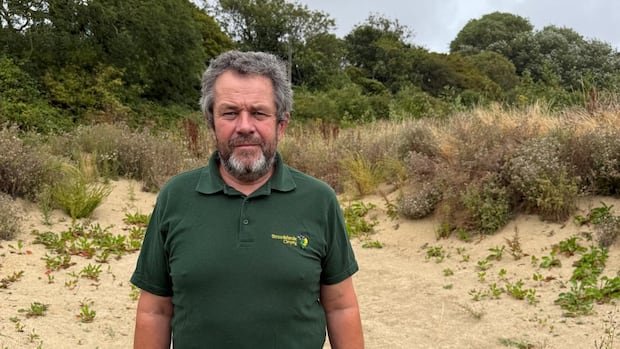

In a field on his farm in southern England, James Baird indicated deep fissures in the ground, emphasizing the severity of the situation. A seasoned crop farmer in West Sussex, Baird expressed astonishment at the extraordinary conditions this summer, noting that his cereal harvest concluded much earlier than usual, resulting in a 25% decrease in crop yields at Stroodelande, his farm.
Contrary to the common perception of England as a rainy country, recent years have seen a pattern of successive droughts, leading Baird to acknowledge the emergence of concerning trends. This summer has been exceptionally dry, transforming the typically lush and green English countryside into parched land due to prolonged heat waves and scarce rainfall.
The Environment Agency recently declared half of England and all of Wales to be in drought, describing the situation as “exceptionally serious.” July’s rainfall in England was a mere seven percent of the monthly average, with southern England receiving only one percent, equating to a mere 0.7 millimetres.
The enduring dry spell not only challenges traditional English ways of life but also raises apprehensions about the nation’s long-term water security. Estimates indicate that by 2050, England may face a shortfall of five billion litres of water daily, potentially leading to food shortages, as warned by the National Farmers’ Union.
The prevailing drought conditions have resulted in scorched crops, dwindling water bodies, and a surge in wildfires across the region. Approximately 20 million people, equivalent to a quarter of the population of England and Wales, are currently under hosepipe bans, enforced by water companies to curb water usage with hefty fines for violations.
Moreover, the increased fire risk poses a new threat to farmers, as evidenced by Eleanor Gilbert’s experience at Rookery Farm in Hampshire, where she and her stepfather battled flames in a nearby field during a harvesting operation. The alarming frequency of wildfires in July set a record, underscoring the challenges faced by farmers in the current climate.
To adapt to the changing conditions, farmers like Baird, Gilbert, and Christensen are implementing strategies such as enriching soil with organic matter and altering crop choices for increased resilience. Christensen noted a decline in milk production from his cows due to the heat stress and scarcity of grazing land, prompting adjustments to ensure animal welfare and farm sustainability.
Despite the hardships posed by the drought, individuals like Charlotte Bownass, residing on a houseboat in London’s canals, remain optimistic but cautious about the uncertain future. As the drought reshapes not only farmlands but also waterways and lifestyles, resilience and adaptability are becoming key attributes for individuals and communities navigating the evolving landscape.