

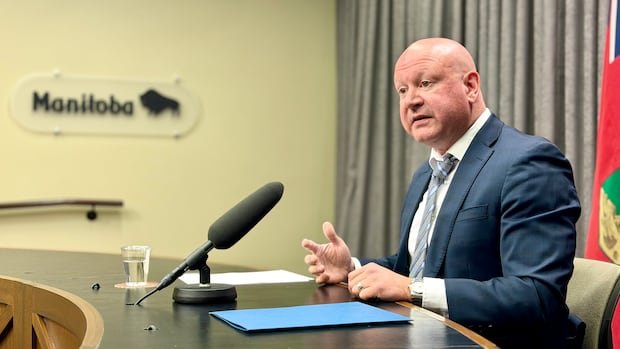

Manitoba has officially announced a public health emergency due to persistently high HIV rates within the province, as disclosed by the chief public health officer on Thursday. Dr. Brent Roussin highlighted that in 2024, Manitoba reported a rate of 19.5 cases per 100,000 individuals, significantly surpassing the national rate of 5.5 cases per 100,000.
Several factors have propelled this emergency situation, including injection drug use, homelessness, mental health challenges, an uptick in other sexually transmitted and bloodborne infections, and obstacles hindering access to healthcare. The incidence of the disease has surged significantly over recent years, with 328 new cases reported in 2025, more than double the 142 cases recorded in 2021 and over three times higher than the 90 cases reported in 2019.
The declaration of a public health emergency will enable the province to explore various avenues to enhance both traditional and non-traditional forms of HIV testing. Dr. Roussin emphasized that beyond a mere response mechanism, this declaration serves as a critical awareness-raising tool for all stakeholders and the broader Manitoba community.
This marks the first time Manitoba has declared a public health emergency concerning HIV. The decision was prompted by a meeting in late 2025 involving Indigenous leaders and community organizations that have been vocal about the escalating HIV rates in the province. Dr. Roussin underscored the importance of not overshadowing the commendable efforts of Manitoba’s health sector and community organizations in combatting the rising HIV cases.
Acknowledging the gravity of the situation, Dr. Roussin emphasized the urgency required to address the challenges faced by individuals and communities in Manitoba. Injection drug use and heterosexual transmission are identified as the primary drivers of HIV transmission in the province, with over 70% of transmissions in 2024 linked to injection drug use.
Efforts are being directed towards boosting the utilization of pre-exposure prophylaxis (PrEP) as a preventive measure to reduce the risk of contracting HIV. The Northern Regional Health Authority and the Prairie Mountain Health region in Manitoba’s southwest exhibit the highest rates of HIV, with the Winnipeg health region recording the most cases overall.
The disproportionate impact of HIV on Indigenous communities is highlighted as a consequence of historical colonization. Collaborative efforts involving Indigenous leadership, community organizations, and federal partners are seen as crucial in mitigating the conditions fueling HIV transmission in Manitoba.
Keewatinohk Inniniw Minoayawin Inc., representing 23 northern Manitoba First Nations, views the declaration of a public health emergency for HIV as a positive initial step. The organization underscores the need for urgent action, adequate funding, and local resources to address the limited access to harm reduction and healthcare services within affected communities.