

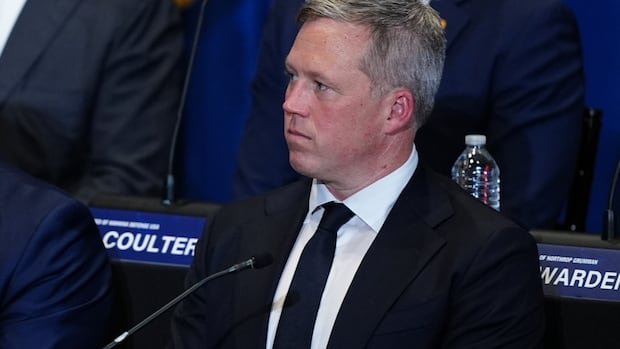

U.S. Army Secretary Dan Driscoll is resigning after serving in the position for 18 months, as confirmed by the White House on Monday. This development marks another high-profile departure within the military leadership under the second term of U.S. President Donald Trump. The reason behind Driscoll’s departure remains undisclosed, although reports suggest tensions with Secretary of War Pete Hegseth could be a contributing factor. The military has been witnessing a series of leadership changes, particularly within the army.
White House spokesperson Anna Kelly praised Driscoll’s contributions to advancing President Trump’s military agenda, focusing on enhancing readiness, promoting strength, and facilitating negotiations between Russia and Ukraine. Kelly emphasized the positive impact of Driscoll’s collaboration with the president and the secretary of war in bolstering the U.S. Army’s capabilities.
Earlier in April, Navy Secretary John Phelan became the first military service head to step down during Trump’s second term, following a sudden announcement by the Pentagon. In the same month, Hegseth removed Gen. Randy George from his position as the army’s top uniformed leader. Additionally, Gen. Christopher Donahue, who commanded the army in Europe and Africa, unexpectedly resigned in June.
Gen. Christopher LaNeve, who has swiftly risen under Hegseth’s leadership, succeeded George as the acting chief of staff for the army. LaNeve made the decision to discontinue a drone modernization program previously championed by Driscoll, redirecting an army unit from drone development back to traditional infantry operations.
Driscoll, a close associate of George, expressed his disappointment at his colleague’s departure, a sentiment shared by lawmakers from both Republican and Democratic parties. Despite his personal feelings, Driscoll acknowledged the prerogative of civilian leadership in selecting military leaders.
Described by Trump as a “disruptor and change agent,” Driscoll is a veteran of the Iraq war, a technology investor, and a former adviser to Vice-President JD Vance. During his tenure as army secretary, Driscoll played a critical role in negotiating peace between Russia and Ukraine and advocated for streamlining bureaucratic processes to expedite drone development and anti-drone capabilities in response to evolving global warfare trends.
Driscoll’s confirmation by the U.S. Senate in February 2025, with a 66-28 vote, followed a largely uncontentious armed services committee hearing focused on modernizing army systems, enhancing recruitment efforts, and strengthening the military’s industrial foundation. Driscoll, who comes from a family with a strong military background, served as an armor officer from 2007 to 2011, including a deployment to Iraq.
In his previous endeavors, Driscoll ran for a North Carolina congressional seat in the 2020 Republican primary, securing approximately eight percent of the vote among multiple candidates.