

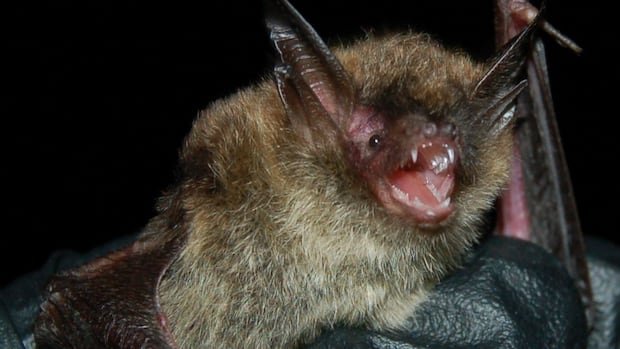

An environmental group in Sudbury is aiming to shift public perception of bats from fear to intrigue by investigating the city’s local bat population. The Junction Creek Stewardship Committee recently organized a “bat walk” at Park Lawn Cemetery, where participants utilized iPads equipped with echometers to detect the high-frequency sounds bats emit through echolocation.
Evan Voutier, an ecological technician with the committee, highlighted the significant interest in bats in Sudbury and the lack of research on local bat species. The group’s initiative not only aims to contribute to bat research but also involves the public in understanding their techniques. Junction Creek Stewardship is examining how bats utilize various habitats in Greater Sudbury, including abandoned mines where some bats hibernate during winter.
Biologist Franco Mariotti, a volunteer for the group, emphasized the importance of studying local bat populations due to ongoing threats. White-nose syndrome, a fungal disease affecting hibernating bats, has led to substantial declines in bat numbers across North America. Additionally, bats face risks from wind turbines, which can cause fatal internal trauma due to rapid pressure changes.
Despite declining populations, the group’s research indicates that bats are prevalent throughout the Sudbury area, with all eight bat species in Ontario found in Junction Creek. Mariotti underscored the essential role bats play as insect predators, aiding in pest control in agricultural and forest environments. The group aims to reshape public perceptions of bats through educational “bat walks.”
The Junction Creek Stewardship Committee plans to host another public “bat walk” on August 19 to continue engaging the community in bat conservation efforts.