

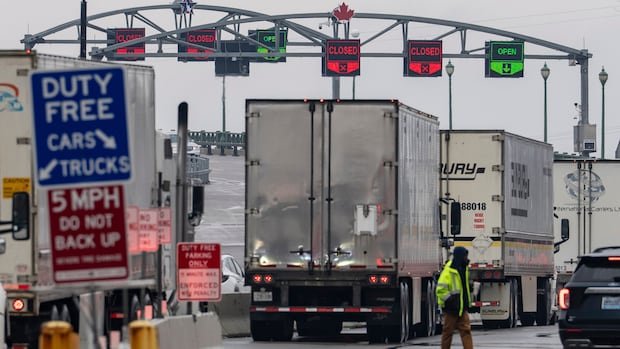

Enforcement of cross-border cargo regulations has significantly increased during the Trump administration, causing delays and financial burdens for shippers. As trade tensions rise and a tariff barrier emerges along the U.S.-Canada border, industry experts note a surge in freight screenings and penalties, reflecting a more protectionist stance by U.S. customs.
Breanna Leininger, overseeing U.S. operations at Pacific Customs Brokers in Vancouver, highlights a substantial shift in border officials’ scrutiny of shipped goods. The demand for documentation has risen tenfold compared to previous years, with customs now delving deeper into product classifications and trade agreements.
Importers are now required to provide extensive paperwork, including labor and manufacturing records, to demonstrate compliance. The level of proof and the specific tariffed items are subject to frequent changes, making compliance a moving target, according to Leininger.
Data from U.S. Customs and Border Protection reveals a 26% increase in audits from the previous year. In the first half of this year, trade penalties collected surged by 169%, amounting to $70.6 million USD, a 53% increase from the entirety of 2025.
The tightened enforcement coincides with an escalating trade conflict between Canada and the U.S., resulting in additional costs and logistical challenges for businesses engaged in cross-border trade. The prolonged border checks and increased documentation requirements contribute to higher expenses and potential disruptions in supply chains.
Alan Dewar, an executive at GHY, a Winnipeg-based customs brokerage, emphasizes the significant financial impact of these regulatory changes on businesses. He notes that delays in transportation, storage costs, and service charges further inflate expenses, discouraging some businesses from pursuing cross-border commerce.
While some companies have managed to navigate these challenges, others find the regulatory landscape too daunting to continue operations smoothly. U.S. Customs and Border Protection emphasizes the importance of importers exercising due diligence and providing accurate information to comply with evolving trade regulations.