

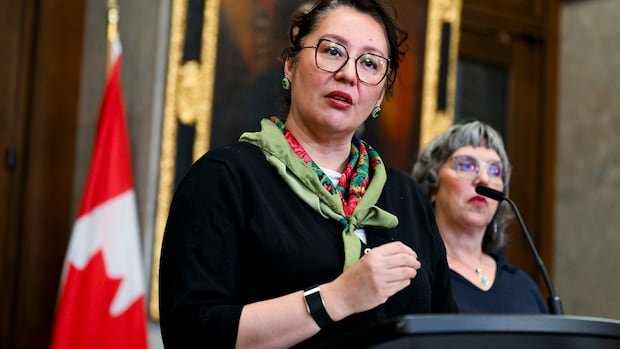

Indigenous Services Minister Mandy Gull-Masty has announced that Ontario First Nations will receive $8.5 billion starting on May 29 to take back control of their child welfare systems. This funding is part of a significant settlement agreement between the federal government and 131 Ontario First Nations, aimed at bringing about long-term reform in on-reserve child and family services. The deal, which was given the green light by the Canadian Human Rights Tribunal in March, is set to see approximately $158 million of the total amount being made available by the end of this month.
According to Indigenous Services Canada, the allocation for each First Nation will be based on factors such as population size, remoteness, and other considerations. Minister Gull-Masty emphasized the importance of Indigenous communities having jurisdiction over their child and family services, noting that this leads to improved outcomes for children.
The settlement funding will supplement existing financial support for child and family services and will be distributed to both First Nations and service providers. Nishnawbe Aski Nation Grand Chief Alvin Fiddler expressed enthusiasm about the funding, highlighting its potential to empower communities to make decisions regarding their children and maintain their cultural connections.
Each First Nation will have the flexibility to utilize the funds in various ways, including investing in facilities for child and family services, housing, food security, and addiction treatment. Regular reporting on the funding’s utilization will be required, with the possibility of audits if deemed necessary by Indigenous Services Canada.
The Ontario agreement could serve as a template for similar regional agreements with First Nations across Canada to establish and operate their own child and family services. Minister Gull-Masty is currently engaged in negotiations with First Nations in Western Canada, Manitoba, Atlantic Canada, and Quebec, with the aim of finalizing agreements in a timely manner.
Regarding the Ontario deal, the Canadian Human Rights Tribunal approved the agreement with all Ontario First Nations except Georgina Island First Nation and Taykwa Tagamou First Nation. Minister Gull-Masty mentioned that a judicial review is being sought to understand the reasons for this exception. She assured continued federal funding for child and family services in the two communities, even though formal feedback from them was not received before the deadline.
This development in Ontario represents progress in resolving a longstanding dispute dating back to 2007, when a human rights complaint was filed against the federal government for underfunding on-reserve child welfare systems. Subsequent rulings by the Canadian Human Rights Tribunal have called for reform in First Nations Child and Family Services, leading to significant compensation and ongoing negotiations for further improvements.
The commitment to empowering First Nations with full jurisdiction and adequate resources to achieve their goals remains a key principle in the ongoing efforts to reform child and family services. Minister Gull-Masty emphasized the significance of the Ontario Final Agreement as a demonstration of the positive outcomes that can be achieved through regional agreements tailored to meet the specific needs of Indigenous communities.