

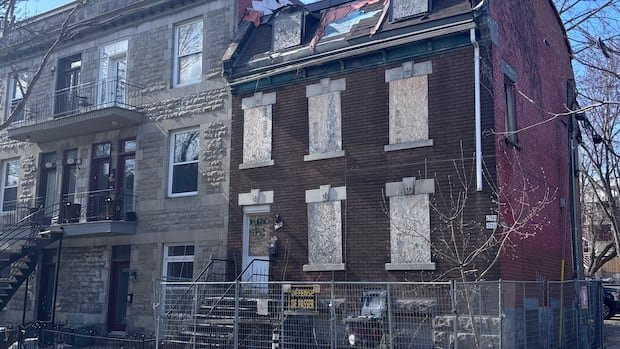

Approximately two and a half years following the implementation of a bylaw in Montreal to increase accountability among owners of vacant properties, less than 20 percent of such properties are officially registered with the city. Owners of properties left vacant for over a year are required to register their buildings on a central list and provide details about the building’s condition.
The primary objective of the registry is to prevent neglect and stimulate redevelopment efforts. It also serves to identify property owners, particularly in cases where ownership is held by a numbered company or individuals residing overseas.
Although an estimated 800 vacant buildings are scattered across Montreal, only about 150 addresses have been registered with the city as of March’s conclusion, as indicated by data sourced by CBC Montreal. This count may be lower due to duplicate entries or the inclusion of multiple units or outbuildings under one property, such as garages or sheds.
Within Montreal’s downtown area alone, there are approximately 100 vacant buildings, according to data maintained by the Ville-Marie borough. However, fewer than 20 properties are currently listed in the city’s vacant building registry.
City spokesperson Hugo Bourgoin explained that the slow uptake was intentional, with the city deliberately delaying the full rollout of the registry to allow boroughs to establish a system for managing applications and aligning it with existing programs.
Bourgoin added that the registry is in a state of continuous evolution, with buildings being added on a weekly basis.
At the beginning of the year, property owners received courtesy letters prompting them to register their buildings. Failure to comply may result in fines ranging from $500 to $4,000, according to Bourgoin. Owners are also obligated to maintain their buildings in good condition to avoid fines, with penalties reaching up to $250,000 for heritage properties.
Despite the bylaw’s approval in the fall of 2023, the mandatory registry only became effective on January 1, 2026.
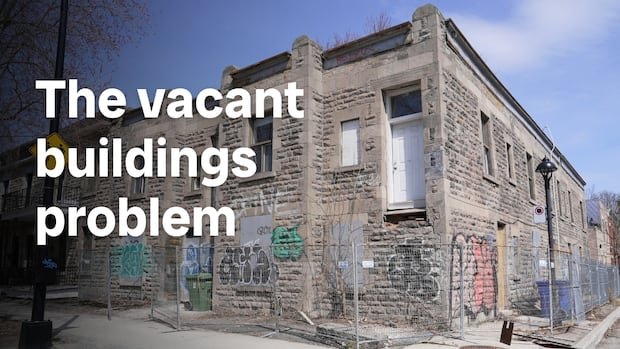
Montreal is an old city with many vacant buildings that are falling into disrepair and causing related problems. The city has enacted measures aimed at holding property owners more accountable, but the impact of those measures — and owners’ willingness to adhere — has so far appeared minimal.
Vacant buildings pose higher fire risks
Vacant buildings have long been a concern in Montreal, as improper securing can attract criminal activities, vandalism, and squatters. These deserted, boarded-up spaces can create a rundown appearance, impacting nearby businesses and homeowners adversely.
Furthermore, vacant buildings are at greater risk of fire incidents.