

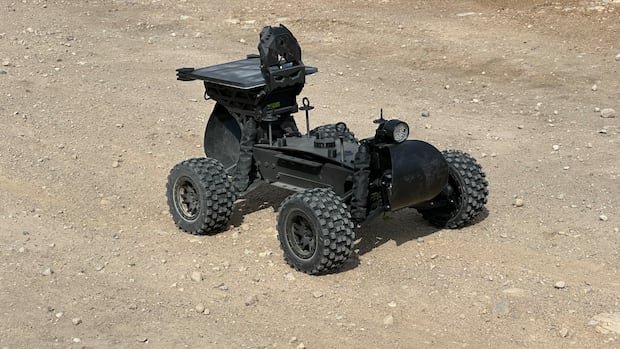

Latvian and Canadian military forces are engaged in a significant training exercise featuring ground drones for the first time, shifting the focus of remote warfare from aerial to terrestrial operations. Drawing insights from former Ukrainian soldiers and technology firms, the troops are swiftly adapting to the new technology amidst a political crisis triggered by an inadvertent drone strike on an oil storage facility in Latvia.
Commanding the Second Mechanized Infantry Battalion, also known as the Iron Battalion, Latvian Lt.-Col. Andris Bruveris emphasized the integral role of ground drones in executing various mission types, including intelligence gathering, enemy engagement, and logistical operations like resupply and casualty evacuations.
The ongoing military exercise, Crystal Arrow 2026, led by the Latvian Brigade alongside a Canadian-led multinational brigade, involves around 2,500 soldiers, including Canadians, and 500 pieces of equipment. While aerial drones have become commonplace in conflict zones like Ukraine, the integration of ground drones poses a fresh challenge for NATO nations in aligning them with existing command structures.
Lt.-Col. Bruveris highlighted the cost-effective and life-saving potential of unmanned systems, particularly in reconnaissance missions, reducing the need for human presence in high-risk scenarios. The exercise is taking place at the secluded SÄlija training site, equipped with specialized electronic warfare capabilities that do not interfere with civilian activities.
Meanwhile, Ukrainian President Volodymyr Zelenskyy’s recent announcement of successful drone operations without human intervention has sparked discussions on the future of warfare. Canadian Lt.-Col. Dan Richel, the Latvian Brigade’s deputy commander, views ground drones as a valuable addition rather than a replacement for traditional frontline troops, emphasizing their complementary role in military operations.
The political crisis in Latvia, triggered by a mistaken Ukrainian drone strike on an oil depot, led to the resignation of the defense minister, Andris Sprūds. The incident underscored concerns over the susceptibility of unmanned systems to external manipulation and prompted calls for enhanced air defense measures in the region by Latvia and Lithuania.
As NATO continues to enhance its defense capabilities, the evolving landscape of warfare, including the use of autonomous systems like drones and unmanned vehicles, is reshaping military strategies. Despite the challenges posed by incidents like the drone strike in Latvia, efforts are underway to bolster defenses against emerging threats in the domain of unmanned warfare.