



Jalen Hurts, quarterback for the Philadelphia Eagles, has become the latest athlete to face the challenge of blood clots, joining the ranks of NBA stars like Victor Wembanyama, Chris Bosh, and Damian Lillard.
The former Super Bowl MVP is anticipated to be sidelined for the remainder of the season due to blood clots found in his lungs, according to a source who is acquainted with the matter, speaking to The Associated Press on Monday under the condition of anonymity due to the sensitive nature of his health status.
Hurts was put on injured reserve on Saturday, just two days after the Eagles announced he was diagnosed with a blood clot in his calf. On Monday, both the Eagles and Hurts’ agent, Nicole Lynn, provided further details regarding his condition, confirming that he has deep vein thrombosis along with bilateral pulmonary emboli, indicating that a clot has moved to his lungs.
This diagnosis has sparked increased awareness regarding blood clots, including their dangers and treatments, while also raising concerns about the rising number of athletes diagnosed with this condition in recent years.
What is deep vein thrombosis?
Deep vein thrombosis, commonly referred to as DVT, describes a blood clot that develops in a deep vein, typically in the lower legs. Occasionally, these clots can dislodge and travel to the lungs, where they can block a blood vessel, a situation known as pulmonary embolism, which can be fatal.
Several factors can contribute to the development of deep vein thrombosis, including immobility, trauma, genetics, and dehydration.
Signs of DVT include unexplained swelling, discoloration, pain, or a combination of these symptoms, and experts express concern about the clot moving through the bloodstream, potentially leading to pulmonary embolism or death.
“When a DVT occurs in the leg or arm, there is a risk that it may break free, and if it does, it can end up blocking a blood vessel in the lung,” said Mary Cushman, a hematologist and professor of medicine at the University of Vermont, in a previous statement to the AP. “If the clot is large enough, it can be fatal.”
What is the treatment?
The most prevalent treatment option involves the use of blood thinners.
In some cases, surgery may be necessary, or blood thinners might be prescribed for extended periods.
Hurts is currently utilizing blood thinners for his treatment and will be prohibited from engaging in any football-related activities until he concludes this medication.
Are athletes more likely to have it?
Richard Ricciardi, a professor at the George Washington University School of Nursing, states that there is no evidence indicating that elite athletes are more likely to develop blood clots compared to similarly aged individuals in the general population.

NHL goalie Frederik Andersen minds the net for the Carolina Hurricanes during the playoffs last season. A few years ago, he had medical tests that found blood clots. (Matt Slocum/The Associated Press)
“I do not believe there are any significant studies comparing elite athletes with non-athletes,” Ricciardi added.
“While athletes are generally regarded as low risk for blood clots, they may encounter a range of sport-specific risk factors, leading to a potentially higher risk than what would be expected for young and fit individuals.
“High-contact sports could theoretically elevate the risk of blood clots, primarily due to injuries caused by collisions and trauma to blood vessel walls,” he noted. “However, to my knowledge, no studies have directly evaluated how much contact sports increase this risk compared to non-contact sports.”
The probability of individuals in their 20s and 30s developing deep vein thrombosis or a pulmonary embolism is around one in 10,000.
Can air travel increase risks?
“Regular long-haul air travel may plausibly heighten blood clot risk in elite athletes, but, to my knowledge, no athlete-specific studies have been conducted,” Ricciardi stated.
“The risk is highest during flights lasting eight hours or more. However, the risk remains low for healthy and fit individuals, concentrating more on those with additional health risk factors.”
The U.S. Centers for Disease Control and Prevention (CDC) notes that blood clots can form in the deep veins of the legs during travel because individuals are seated in confined spaces for extended periods.
According to the CDC, “most people who develop travel-associated blood clots” have other risk factors, such as a history of blood clots, an inherited clotting disorder, or a family history of blood clots.
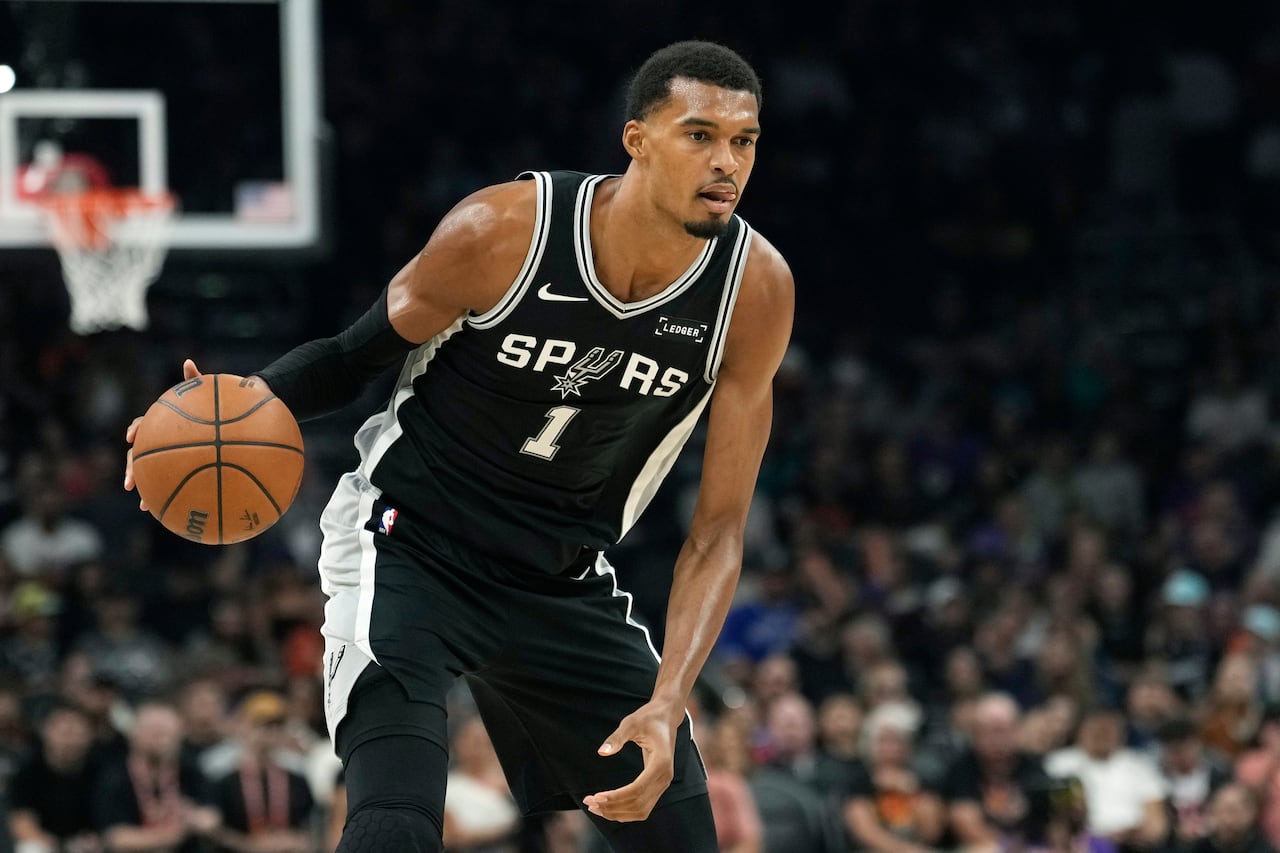
San Antonio Spurs forward Victor Wembanyama plays in a pre-season game against the Phoenix Suns earlier this month. (Ross D. Franklin/The Associated Press)
Other athletes with blood clots
Victor Wembanyama: His 2024-25 season was cut short due to a blood clot in his right shoulder. The seven-foot-four sensation from France made a comeback last season, finishing third in the NBA MVP voting and earning the Defensive Player of the Year award while leading the San Antonio Spurs to the NBA Finals.
Damian Lillard: The nine-time NBA All-Star scored 16 points with the Milwaukee Bucks on March 18, 2025, and shortly after, the team announced he had deep vein thrombosis in his right calf. Lillard returned for the playoffs and subsequently tore his Achilles tendon, which kept him out last season during his return to Portland.

Blood clots ended the basketball career of Chris Bosh, who played for the Toronto Raptors and the Miami Heat during his Hall of Fame career. (Steve Marcus/Getty Images)
Chris Bosh: A decade ago, blood clots terminated the career of the Basketball Hall of Famer. During the 2015-16 season, he was averaging 19.1 points and 7.4 rebounds in 33.5 minutes when a clot in one of his legs was discovered just as he arrived in Toronto for that year’s All-Star Game at the age of 31.
Ausar Thompson: The NBA All-Defensive team member missed the final month of his rookie season two years ago due to a blood clot. He was not cleared to return during the initial month of his second season while navigating a medical process with the NBA and the players’ union.

American golfer Nelly Korda plays a tee shot during a practice round for the Solheim Cup last month. (Alastair Grant/The Associated Press)
Nelly Korda: The current No. 1 ranked player in women’s golf took a four-month hiatus in 2022 — the year following her first major title — due to a blood clot in her left arm that necessitated surgery.
Frederik Andersen: Almost three years ago, the goaltender for the Carolina Hurricanes underwent medical tests that revealed blood clots. He played for the Hurricanes last season when they secured the Stanley Cup and is currently recuperating from a knee injury while with the Edmonton Oilers.
Merrill Kelly: The right-handed pitcher has made a comeback from his blood clot issues to compete for the Arizona Diamondbacks, finishing last season with a record of 10-14 in 29 starts.
Christian Barmore: The defensive tackle for the New England Patriots was limited to just four games during the 2024 season due to blood clots. He started 15 games the previous season and has participated in five games this year. “I could have lost my life,” Barmore stated.