

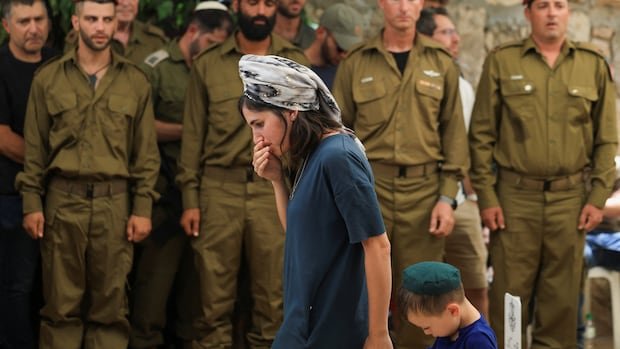

The Israeli military confirmed on Thursday that two soldiers lost their lives in an explosion in southern Lebanon, marking the first Israeli casualties since the fragile truce with Hezbollah was put in place in June. Additionally, four soldiers sustained serious injuries in the incident at the village of Majdal Zoun, which had been previously reported by Israeli media.
In response to what it deemed as a breach of the ceasefire by Hezbollah, the Israeli army conducted strikes in southern Lebanon and issued an evacuation warning to residents of the village of Mansouri – the first such advisory in weeks. Lebanon’s Health Ministry reported one fatality and 12 injuries from an Israeli strike in Tebnine, along with eight injuries from overnight strikes in Burj al-Shemali. Artillery shelling targeted the areas of Mansouri and Majdal Zoun, as per the state-run National News Agency.
The United Nations peacekeeping force in southern Lebanon, UNIFIL, documented 113 projectiles launched by the Israeli military on Wednesday, the highest count recorded since June 21. The escalation coincided with negotiations between Lebanese and Israeli representatives in Rome to address the terms of a June 26 agreement, involving the withdrawal of Israeli forces from occupied areas in southern Lebanon to allow the Lebanese army to assume control, with the condition of Hezbollah’s disarmament.
Although talks were briefly interrupted due to the escalating situation on the ground, they resumed the following day. Hezbollah, backed by Iran, did not provide any statement regarding the recent events. The latest round of discussions centered on the establishment of “pilot zones” where Israeli forces would pull back, and the Lebanese army would take charge. Initial steps were taken in a pilot zone last month, marking progress in the implementation process.
The conflict between Israel and Hezbollah reignited on March 2, following Hezbollah’s rocket attacks in response to actions by the U.S. and Israel against Iran. The toll from Israeli strikes in Lebanon since then exceeds 4,000, including numerous civilian casualties. On the Israeli side, around 40 soldiers and three civilians, including a military contractor, have lost their lives. While a tenuous ceasefire has mostly held since June 20, Israeli forces have maintained control over parts of southern Lebanon and conducted sporadic airstrikes and shelling.
The discussions in Rome also addressed the situation in Zawtar al-Gharbieh, where the Lebanese army entered the town, allowing some civilians to return. However, many found their homes destroyed and had to leave once again. The U.S. ambassador to Lebanon, Michel Issa, cautioned against hastening the implementation of new pilot zones, emphasizing the need to safeguard civilians throughout the process.
Hezbollah, which did not participate in the direct talks between Lebanon and Israel, opposed the negotiations, raising concerns over the Lebanese government’s concessions without ensuring an Israeli withdrawal.