

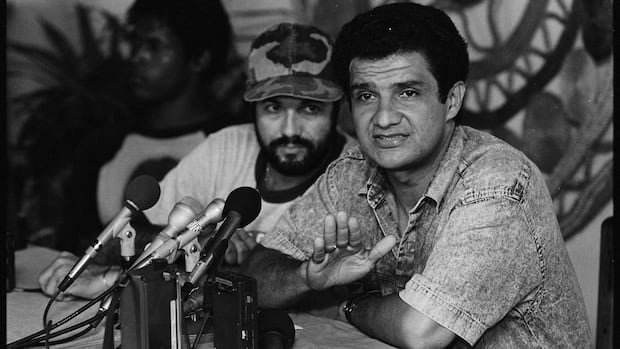

Nicaraguan Indigenous leader Brooklyn Rivera’s whereabouts were unknown to his loved ones for three years after his arrest. Last week, the government released photos of Rivera, showing him in a hospital, frail and intubated. Two days later, he passed away.
Clément Chartier, a Métis leader and a close friend of Rivera, expressed sadness over his death, describing him as a courageous and educated individual who passionately advocated for his people.
Request for a Thorough Investigation
Rivera, a renowned activist, had dedicated decades to advocating for Indigenous autonomy in Nicaragua. He had served in Nicaragua’s national assembly for 16 years and led the Miskito people for over four decades.
He had been in detention since 2023, during a period marked by severe repression of political dissent under the leadership of Nicaragua’s co-presidents, Daniel Ortega and Rosario Murillo, who are associated with the Sandinista party.
The Nicaraguan government stated that Rivera succumbed to a bacterial infection following a prior COVID-19 case despite extensive efforts to save him. Reed Brody, a U.S. human rights lawyer, held the government responsible for Rivera’s demise, citing the harsh conditions of his prolonged detention.
The UN, human rights organizations, and Indigenous groups have urged for a comprehensive investigation into Rivera’s death.
Legacy of a Beloved Leader
Rivera had dedicated his career to safeguarding Miskito autonomy in Nicaragua’s resource-rich northeast region. Despite facing challenges and exile in the ’70s and ’80s, he remained steadfast in his pursuit of Indigenous rights.
Chartier and Rivera had a longstanding friendship dating back to 1981, collaborating on Indigenous issues globally. Rivera’s founding of the Yatama party in the late ’80s was instrumental in securing autonomy for Indigenous communities.
After participating in a UN forum in 2023, Rivera faced restrictions on returning to Nicaragua due to his criticism of the government’s treatment of Indigenous peoples.
Call for International Attention
Yatama was disbanded, and many of its leaders were arrested, leading Rivera to live in hiding until his detention in 2023 on terrorism charges. His prolonged confinement without formal charges sparked international outcry.
Brody highlighted the prevalence of arbitrary detentions and human rights abuses in Nicaragua, emphasizing the urgent need for accountability and justice.
-
Exiled and stripped of citizenship, Nicaraguans look to Canada for chance to begin new lives
-
Nicaragua arrests more opposition leaders in crackdown ahead of election
Brody emphasized the need for global attention to the plight of individuals like Rivera, stressing the ongoing human rights violations in Nicaragua.