

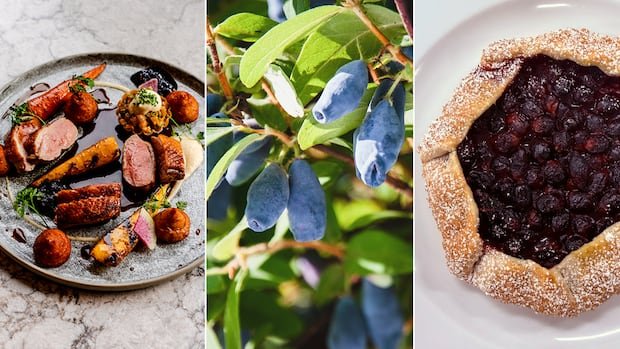

Haskap berries, known for their bold burgundy color and vibrant taste, are making a splash on menus nationwide this summer. These berries, also called blue honeysuckle or honeyberry, have their origins in the wild northern boreal forests of Asia, Europe, and Canada. While they were once overlooked due to their unpleasant flavor, recent breeding efforts by University of Saskatchewan professor Bob Bors have led to sweeter and more palatable varieties like the Borealis and Tundra cultivars.
Chefs all across Canada are now embracing the haskap berry, with many incorporating it into their dishes. Prairie chefs were among the first to jump on the haskap bandwagon, given the region’s strong food culture centered around berries. From cocktails to desserts, haskaps are becoming a sought-after ingredient in the culinary world.
The haskap berry, resembling an elongated blueberry, boasts a unique blend of sweetness, tartness, and fruitiness. Chefs are drawn to its natural pectin content, making it a versatile ingredient for baking. Pastry chefs like Sarah Villamere appreciate the berries’ creamy texture and minimal seeds, making them ideal for various culinary creations.
In addition to sweet treats, haskaps are finding their way into savory dishes as well. Chefs are experimenting with grilled meats and vegetable dishes, pairing the berry’s sweet and acidic profile with rich and savory flavors for a well-balanced dish.
With the haskap season typically running from mid-June to mid-August, these berries are becoming more accessible at farmers’ markets and specialty stores. Home cooks are encouraged to try making a simple compote or syrup with haskaps to elevate their breakfast or dinner dishes. Packed with antioxidants, vitamins, and fiber, haskaps offer a nutritious boost to any meal.
As consumer interest in healthier eating habits grows, haskaps are expected to gain popularity as a versatile and nutrient-rich ingredient for homemade dishes.