

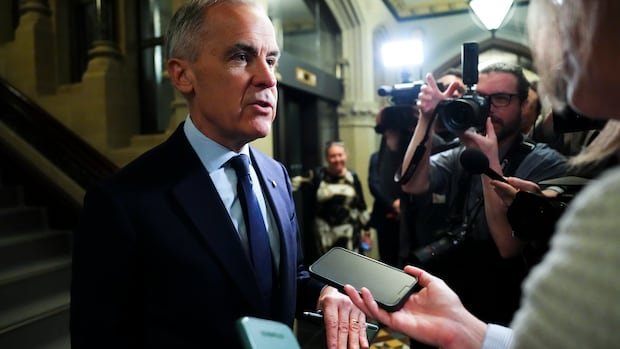

The Carney administration is preparing to introduce modifications to streamline the approval and construction processes for natural resource projects, including pipelines. Two undisclosed government sources have revealed that an announcement is expected later this week, signaling potential alterations to the regulatory framework governing all natural resource and federally regulated major projects, with a particular emphasis on energy and natural resources.
The sources, who opted to remain unnamed as they were not authorized to discuss internal discussions publicly, disclosed that the proposed changes align with the government’s commitment to conduct a single review for each project and adhere to a two-year decision timeline for approving major projects. The anticipated adjustments are likely to encompass comprehensive modifications to existing processes, prompting the government to announce upcoming consultations before enacting necessary legislation.
According to the sources, the forthcoming changes aim to facilitate the construction of pipelines while still mandating consultations with Indigenous communities. Industry stakeholders are anticipated to welcome the revisions, although environmental advocates may express reservations. This approach distinguishes itself from the mechanisms established under the passage of C-5, a legislative act that permitted legislators to override regulations to expedite projects deemed nationally significant. The proposed alterations are intended to impact all projects, regardless of their listing status.
In a related context, ongoing negotiations between the federal government and Alberta are focused on fulfilling the terms outlined in last year’s memorandum of understanding (MOU), which includes provisions for constructing a pipeline to the West Coast. Despite challenges, there is optimism among federal and provincial sources that an agreement can be reached, particularly concerning the escalating industrial carbon price—a pivotal point of contention. However, uncertainties persist regarding the outcome of the impending meeting between Premier Danielle Smith and the Prime Minister scheduled for this Friday.
The MOU stipulated a minimum effective credit price of $130 per tonne without specifying a timeline for attaining this threshold. As of now, carbon credits in Alberta are trading around $40, significantly below the current headline price of $95 per tonne. Insights from a senior Liberal source involved in the negotiations indicate that Alberta is advocating for the $130 per tonne to serve as the cap until 2050, whereas Ottawa proposes it as the baseline for future incremental increases.
Premier Smith is set to engage with Carney during her visit to Ottawa, coinciding with her participation in the Canada Strong and Free Network Conference alongside other prominent Canadian Conservatives. In a recent statement, Smith expressed cautious optimism regarding the negotiation progress, highlighting the remaining issues, including the concept of “contracts for differences,” a component not explicitly addressed in the MOU.
Moreover, the fate of Clean Electricity Regulations (CER) hangs in the balance as the negotiations continue. The MOU outlines that upon finalizing the new carbon pricing agreement, Canada will suspend the CER in Alberta. These regulations were designed to achieve a net-zero power grid by 2050, with significant implications for Alberta’s emissions reduction targets. However, with the impasse on carbon pricing negotiations, concerns arise about the feasibility of developing a tailored Alberta solution to effectively reduce pollution from the province’s electricity sector.
Over the years, officials at Environment and Climate Change Canada have explored whether imposing a robust emissions pricing mechanism alone would suffice to steer the country towards meeting its climate objectives. The conclusive findings from their assessments suggest that an emissions price mechanism, in isolation, is insufficient to achieve the desired climate targets.
In conclusion, the impending changes in the regulatory landscape are poised to impact the approval processes for energy projects and pipelines, reflecting the government’s commitment to streamlining project reviews and decision timelines while acknowledging the necessity of ongoing consultations with Indigenous groups. The negotiations between the federal government and Alberta underscore the complexities surrounding carbon pricing agreements and emissions reduction strategies, indicating the challenges in aligning diverse interests to address environmental concerns effectively.