

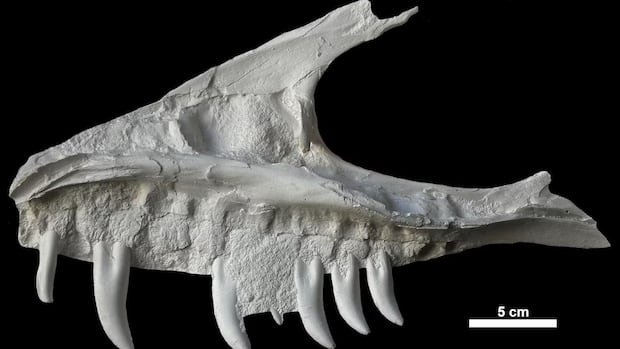

Researchers from the University of Alberta have identified a dinosaur skull discovered in a British Columbia campground as belonging to a faster and lighter tyrannosaur species than the well-known T. rex. The fossil, found about 76 million years ago, was determined to be from a Gorgosaurus, shedding light on the prehistoric creatures that once inhabited Western Canada.
The initial discovery was made by Rick Lambert in Tumbler Ridge, near the Alberta border, when he stumbled upon a peculiar-looking rock during a hike in 2017. Lambert’s background in fossil hunting, combined with a helpful squirrel’s guidance, led to the unearthing of B.C.’s first tyrannosaurus skull.
Following the find, paleontologists from the Tumbler Ridge Museum Foundation confirmed the significance of the discovery, noting it as the first of its kind in the region. The fossilized remains, primarily consisting of the dinosaur’s upper jaw, were well-preserved, allowing researchers to create a detailed cast of the skull’s distinctive features.
Lead author Colton Coppock described the Gorgosaurus as a relative of the T. rex, with distinct characteristics such as triangular horns above its eyes. The study of the fossil revealed unique bone sutures and dental patterns, suggesting that the dinosaur was likely a juvenile at the time of its demise.
Further analysis indicated that the Gorgosaurus had a broader geographic range than previously thought, spanning from northern British Columbia to northern Montana. This newfound information positions British Columbia as a promising area for future dinosaur discoveries, marking a new frontier in paleontological research.
For Lambert, the significance of the fossil discovery goes beyond scientific value, symbolizing the enduring history of life on Earth and the wonder of the natural world.