

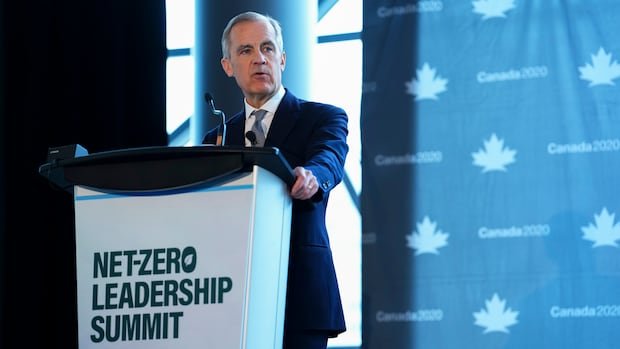

Ten months prior to his resignation from Mark Carney’s cabinet, Steven Guilbeault publicly supported the then Liberal leadership candidate. Guilbeault highlighted his longstanding acquaintance with Carney, emphasizing their collaboration on green energy, climate change mitigation, and the financial sector’s role in combating climate change. Carney’s reputation as a climate advocate was well-established, notably dating back a decade to a significant speech during his tenure as the governor of the Bank of England. He held key roles such as the UN’s special envoy for climate action and finance and co-chaired the Glasgow Financial Alliance for Net Zero.
Guilbeault’s resignation shed light on several climate policies under Carney’s government that had been either abandoned, delayed, or weakened, prompting questions about Guilbeault’s initial assessment of Carney. In response, Guilbeault clarified that while he did not misjudge Carney, they held differing perspectives on addressing climate change, particularly in terms of regulatory approaches versus market-driven solutions.
Carney’s focus on industrial carbon pricing reflected his belief in market-driven solutions to combat climate change, as illustrated in his book “Value(s)” that emphasized the urgency of addressing climate change for future generations. Despite the alignment on climate change goals, differences in strategy have emerged, challenging Carney’s government to demonstrate a credible path towards achieving net-zero emissions by 2050.
The implementation of industrial carbon pricing systems faced challenges due to design flaws and political resistance, prompting the memorandum of understanding with Alberta to address these issues. However, concerns arose regarding potential exemptions for Alberta, raising questions about the overall impact on national climate policy coherence.
Experts suggested exploring equivalency agreements with Alberta to reconcile regulatory differences and ensure emission reductions are maintained. Emphasizing electrification and clean electricity, the government’s climate policy agenda aimed to align with long-term goals of achieving net-zero emissions.
Ongoing uncertainties surrounding climate policies, such as the suspended zero-emission vehicle mandate and the winding down of retrofit programs, raised concerns about the government’s commitment to climate action. The departure of members from the Net-Zero Advisory Body further underscored the need for a robust governance framework to guide climate policy effectively.
Despite potential philosophical differences influencing Carney’s climate policy decisions, public opinion and political dynamics also played a significant role. Recent polls indicated a lower priority for climate change among voters compared to other pressing issues, potentially influencing political strategies to de-emphasize climate policies.
As political landscapes evolve, the Liberal government faces challenges in balancing environmental concerns with economic interests, particularly in light of criticisms and concerns raised by key stakeholders. Guilbeault’s departure from the cabinet could impact the government’s climate agenda, potentially influencing future climate policy decisions.