

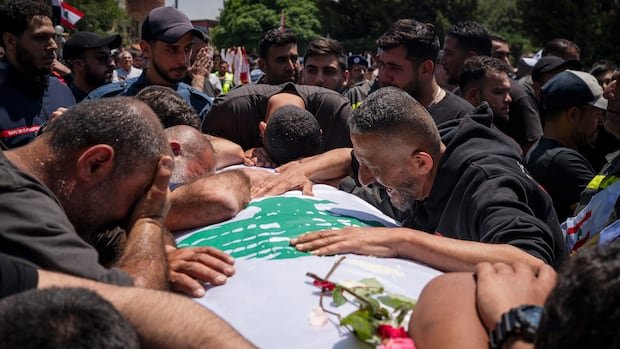

Nearly three weeks following a ceasefire brokered by the U.S. between Lebanon and Israel, mounting attacks and expanding incursions are revealing significant flaws in an agreement that experts say was never intended to completely stop the violence.
The ceasefire aimed to temporarily halt renewed clashes between the two nations after Hezbollah, backed by Iran, fired at Israel on March 2. This was in response to attacks by the U.S. and Israel on Iran starting on February 28, leading to Israel’s invasion of Lebanon in March.
Despite the ceasefire announced on April 16, both sides have continued exchanging fire, with Israel issuing evacuation orders for numerous towns and villages in southern Lebanon. Recently, Israel conducted airstrikes in Beirut’s southern suburbs, marking the first such incident since the ceasefire came into effect.
Many political analysts believe the agreement is primarily symbolic, serving to contain the conflict’s scale and act as a diplomatic gesture rather than bringing a complete halt to hostilities.
The conflict between Israel and Lebanon has evolved into a secondary front in the broader U.S. and Israel battle against Iran, with both ceasefire agreements perceived as fragile and at risk of collapsing. While Tehran insists that any resolution to the wider conflict must include a cessation of hostilities in Lebanon, Washington maintains that these issues are separate but faces pressure to mediate a deal.
Reports suggest that similar agreements in other regions, like Gaza, have failed to sustain peace, with hundreds of casualties occurring in Israeli attacks since a ceasefire in October 2025. The stability of the Lebanon ceasefire is further complicated by Israel’s objectives in the area, especially regarding groups like Hamas and Hezbollah.
The conflict between Lebanon and Israel has deep-rooted complexities that go beyond any single ceasefire attempt, as both nations have been technically at war since Israel’s establishment in 1948. The disarmament of Hezbollah remains a central issue, with diverging views on how to address the group’s military capabilities.
Overall, the ceasefire in Lebanon serves as a diplomatic tool amid broader geopolitical tensions, with efforts to resolve the conflict facing significant challenges due to the complex dynamics at play among the involved parties.