

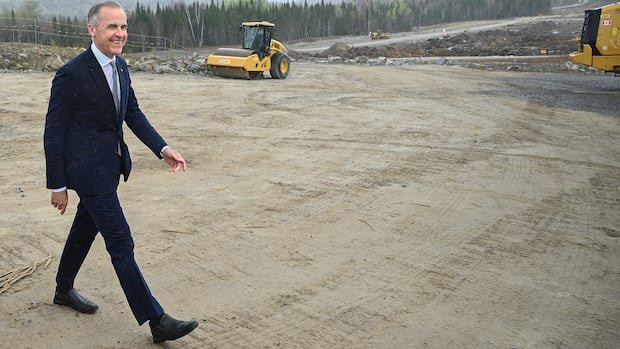

Prime Minister Mark Carney remained steadfast on Tuesday in response to the United States’ abrupt decision to halt a long-established bilateral defense board and review its future. Addressing the issue at a news conference in Quebec, Carney downplayed the significance of the move, emphasizing the numerous areas of close defense cooperation between the United States and Canada.
Established in 1940, the Permanent Joint Board on Defense, which has not convened since 2024, serves as an advisory body for U.S.-Canada bilateral defense collaboration. The U.S. Undersecretary of War, Elbridge Colby, recently announced the Pentagon’s decision to “pause” its involvement in the bilateral board, citing the need for both countries to invest in their own defense capabilities.
While the suspension of the board does not impact joint military operations, it carries symbolic weight amid ongoing trade disputes and heightened bilateral tensions between Canada and the U.S. Colby’s statements suggest that Canada’s failure to make substantial progress on defense commitments played a role in the U.S.’s decision.
Carney, in response, highlighted the existing cooperation between Canada and the U.S. while also expressing a commitment to diversifying defense partnerships with other NATO allies and Ukraine. He emphasized Canada’s support for Ukraine’s defense against Russia, aligning with shared values and commitments with allied nations.
Moreover, the Prime Minister reiterated plans to increase defense spending, citing ongoing projects like the NORAD upgrades costing billions of dollars. Canada recently met its NATO defense spending target of two percent of GDP and is currently tracking at 2.1 percent. However, concerns have been raised about the lack of a clear financial plan to meet the newer NATO defense spending target of 3.5 percent of GDP by 2035.
Carney acknowledged the evolving nature of modern warfare, driven by technological advancements like drone technology and artificial intelligence. He emphasized the need for strategic and efficient allocation of defense funds, pointing out the changing landscape of military operations and the importance of adapting to new challenges.
Looking ahead, the Prime Minister noted that NATO spending targets are subject to review in 2030 as part of ongoing efforts to adapt to emerging security threats and maintain effective defense capabilities.