


A man, 30, from Sudan made an appearance in a Belfast court on Wednesday, facing charges of attempted murder for a knife assault that caused serious injuries to a victim and led to anti-immigrant disturbances across Northern Ireland. Hadi Alodid, the accused, allegedly blinded Stephen Ogilvie in one eye during the attack and also stands accused of threatening a radiographer and possessing a knife on the same day.
Alodid, who declined legal assistance with the help of an Arabic interpreter, did not enter a plea during the court proceedings. The Police Service of Northern Ireland stated that there is no indication of terrorism involvement in the incident and they are not pursuing other suspects.
In response to the attack, Ogilvie’s family expressed deep shock and devastation over the assault on their loved one. They emphasized their focus on supporting his recovery and thanked the immediate responders and locals who intervened during the assault.
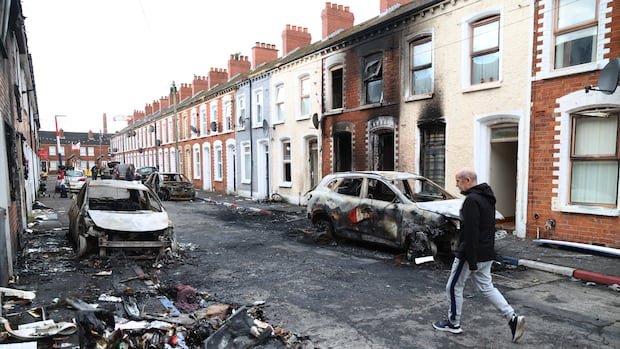
Following the court appearance, a wave of violence ensued, with masked individuals setting fire to multiple residences they believed housed immigrants, setting fire to bins, burning a bus in Belfast, and targeting police with projectiles. Firefighters rescued several individuals from burning homes.
The family of Ogilvie denounced the violence and stressed that such tragedies should not be used to sow division or animosity. They highlighted the valuable contributions made by migrants in various sectors of the country and called for peaceful resolution and respect.
Residents in east Belfast were visibly shaken, with municipal workers boarding up shattered windows and locals surveying the aftermath of torched vehicles and buildings from the previous night’s chaos.
Chief Constable Jon Boutcher pledged accountability for those involved in criminal acts, comparing the recent events to previous instances of rioting and violence in the region. He assured the public that those responsible for the violence would face prosecution.
In anticipation of further unrest, additional police officers are expected to bolster security measures, with up to 200 officers planned to arrive from different parts of Britain. The community, including individuals like Anselme Shima from the Democratic Republic of the Congo, expressed fear and apprehension over the escalating violence and its implications.
Political figures and community leaders condemned the violence, labeling it as reprehensible and cowardly. Efforts to incite unrest through social media platforms were criticized, with calls for respect and calm prevailing in the face of escalating tensions.
Amidst the turmoil, concerns arose regarding border security and immigration policies, with calls for a review of the open border between Northern Ireland and the Republic of Ireland. The delicate issue of border control remains a critical aspect of the peace process following The Troubles.
The repercussions of the Belfast knife attack reverberated beyond Northern Ireland, triggering demonstrations in Scotland and England. The incident underscored the complexities surrounding immigration, social integration, and the need for peaceful coexistence in diverse communities.