

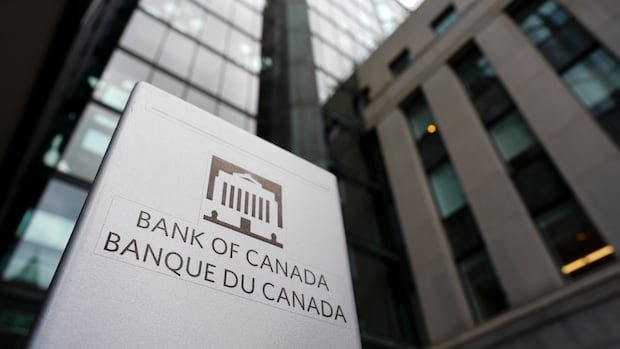

The Bank of Canada maintained its key interest rate at 2.25 percent on the anticipated Wednesday, stating that any adjustments to the rate would likely be minimal if the economy progresses as projected. Governor Tiff Macklem mentioned that the current key rate is deemed appropriate if economic conditions align with the central bank’s forecasts, hinting at potential future modifications based on evolving risks.
Acknowledging the elevated uncertainty, Macklem emphasized that policy rate changes would be minor if the economy follows the base scenario. However, he highlighted the need for flexibility in monetary policy due to the heightened uncertainty and diverse potential outcomes.
The bank emphasized its close monitoring of the repercussions of the Iran conflict, which has significantly raised energy prices, and the uncertainties surrounding trade policies. Despite surging oil prices, the bank currently overlooks their impact on inflation, but prolonged high prices could necessitate rate increases.
The bank anticipates a temporary surge in inflation to around three percent in April, up from 2.4 percent in March, with a yearly average of approximately 2.3 percent. Nonetheless, inflation is expected to revert to the bank’s two percent target by early next year. Furthermore, the bank adjusted its 2026 growth forecast to 1.2 percent, up from the previous 1.1 percent projection made in January.
Macklem noted that current inflation concerns primarily stem from energy prices, with long-term inflation expectations remaining stable. While short-term inflation expectations have risen due to elevated energy and food costs, the long-term outlook remains anchored.
The bank assumed unchanged U.S. tariffs and predicted a decline in oil prices to $75 US per barrel by mid-2027. However, Macklem warned that sustained high energy prices could lead to persistent inflation, potentially necessitating consecutive rate hikes.
In addition to oil prices, trade tensions pose a long-term impact, with potential implications for policy rate adjustments. The Bank of Canada’s acknowledgment of these factors suggests a stance of maintaining stability for the foreseeable future, according to CIBC economist Avery Shenfeld.
The upcoming monetary policy decision is scheduled for June 10, with market expectations leaning towards no rate change, although a 25-basis-point hike in October is currently factored in by money markets.