

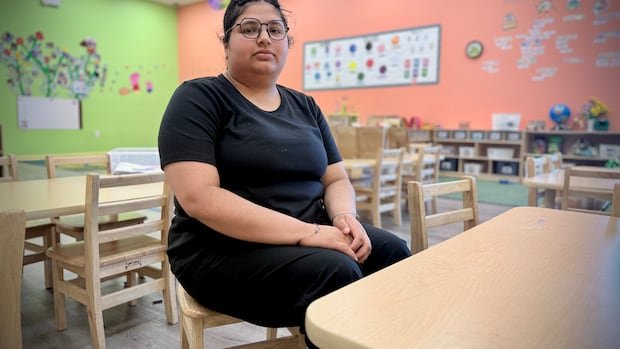

A childcare worker in Nanaimo, B.C., is raising concerns over recent alterations to B.C.’s provincial nominee program, which have now eliminated her occupation as a potential route to permanent residency. Akash Kaur emphasizes that early childhood education assistants (ECEAs) play a crucial role in B.C.’s childcare system, essential for keeping daycares operational for working parents. Kaur, employed at Tiny Hoppers daycare, stresses the high demand for childcare workers but fears that the recent changes may deter individuals from pursuing this career path.
The provincial nominee program allows provinces and territories to prioritize occupations and sectors facing labor shortages by nominating skilled immigrants with specific qualifications and experience. Each region sets its own criteria and annual nomination quotas. Recently, the B.C. government adjusted its list of in-demand occupations under the program.
While early childhood educators (ECEs) remain prioritized in the “education” category, ECE assistants working under ECEs have been excluded from the program. The Ministry of Post-Secondary Education and Future Skills clarified that certified ECEs are the focus due to severe shortages and extensive training requirements in that role.
Becoming a full ECE requires around a year of study, including unpaid internships. B.C.’s daycare regulations typically mandate at least one ECE on staff, with varying ECEA ratios based on children’s ages. Kaur, who arrived in Canada as a student in 2020, pursued ECEA training under B.C.’s nominee program as a pathway to residency, driven by her passion for working with children.
Sonya Boyce from the Coalition of Childcare Advocates of B.C. warns that the program change will disproportionately impact low-income immigrant women in the childcare sector. She advocates for more support to help ECEAs, especially immigrant women, enhance their skills. Kaur and her colleagues aspire to advance their careers but face challenges due to the lack of permanent residency status, which hinders access to financial aid and equitable tuition fees.
The alteration in the program is expected to exacerbate staffing shortages in the daycare sector statewide. Linia Park, Kaur’s supervisor at Tiny Hoppers, anticipates implications for their daycare as many employees are immigrant women. Park notes the industry’s struggle to attract and retain qualified workers, especially in high-stress roles like ECEs and ECEAs. Immigrant workers, she highlights, demonstrate resilience and dedication despite the demanding nature of the job.