

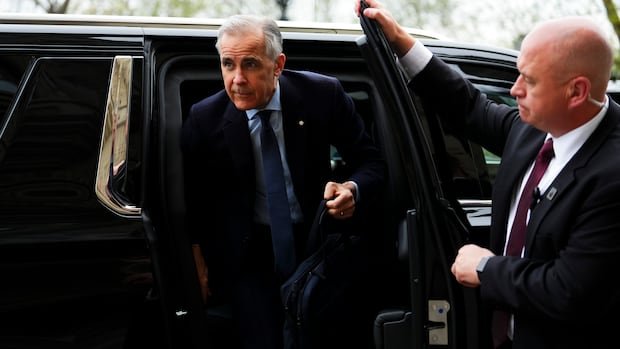

Prime Minister Mark Carney announced on Wednesday his intention to consider the recommendations of an independent advisory body in making appointments to fill vacancies in the Senate. Carney did not specify how this guidance would influence his decisions on appointments. Former Prime Minister Justin Trudeau broke with longstanding Canadian parliamentary tradition by appointing Independent senators and removing partisan affiliations from the Senate. Trudeau established an advisory committee to receive applications for Senate positions and provide recommendations for appointments.
Since assuming office, Carney has not disclosed his approach to Senate appointments. When questioned about following Trudeau’s process or reverting to appointing partisan Liberals, Carney briefly responded that he would consider the advice of the independent advisory committee instituted by his predecessor. To date, Carney has not appointed any senators, leading to a buildup of nine vacant Senate seats with more expected to become available in the near future.
The advisory committee, like the Senate, faces a shortage of members, with most positions remaining unfilled. The committee is supposed to consist of three federal members and two representatives from each province and territory, but currently, only the federal positions and the Nova Scotia spots are occupied.
Carney did not explicitly outline how he would utilize the committee’s recommendations, noting that while the committee makes suggestions for Senate appointments, these recommendations are not binding. Conservatives have criticized Trudeau’s appointments for leaning towards progressive ideologies despite being labeled as independent. Conservative Senator Denis Batters criticized the application process as disingenuous and advocated for a return to previous practices.
In 2024, the Senate implemented new regulations aimed at solidifying the independence it acquired during Trudeau’s tenure. These rules granted more authority to the recognized Senate groups—the Progressive Senate Group, Canadian Senators Group, and Independent Senators Group. Unlike the House of Commons, where there are government and opposition roles, the Senate now affords similar powers and additional speaking opportunities to various groups during debates. The leaders of these recognized groups, now outnumbering the Conservatives in the Senate, can defer votes on legislation and participate in committee sessions to interrogate witnesses.