

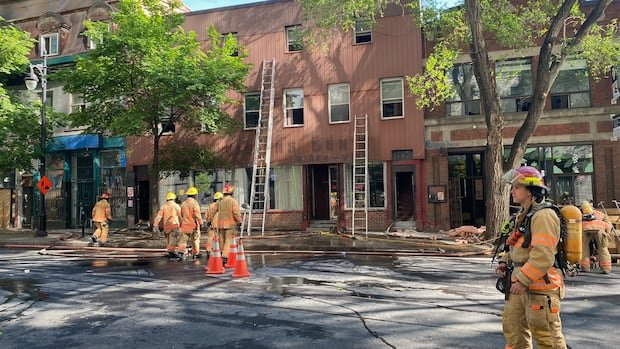

A fire that broke out in May 2024 at Jane Lu’s family residence in Montreal led firefighters to break through floors and ceilings to extinguish it. The blaze, which originated at the Bouillon Bilk restaurant on St-Laurent Boulevard, caused significant damage, forcing Lu’s father, brother, and other tenants to evacuate due to water and structural damage.
Facing financial constraints, Lu’s family contemplated demolishing the building but encountered obstacles from the city, which required a concrete rebuilding plan. The bureaucratic challenges and lack of assistance from the city prolonged the decision-making process for the property owners.
Subsequently, the vacant building posed safety concerns, prompting the family to seek a demolition permit to prevent potential hazards. However, the city demanded detailed replacement project plans and financial proof before granting the permit, adding to Lu’s frustration.
The situation highlighted the difficulties property owners face in navigating Montreal’s regulations, with even experienced developers finding it challenging. Daniel Goodfellow, a developer, expressed dissatisfaction with the city’s reluctance to issue demolition permits unless a property posed immediate risks, suggesting a strategy to pressure owners into making repairs or selling.
Despite concerns about preserving heritage buildings, the repeated fires in vacant structures underscore the urgency of addressing safety risks. Montreal’s firefighters’ association president emphasized the importance of either renovating or demolishing damaged buildings to prevent future incidents, emphasizing the need for proactive measures.
While acknowledging the city’s aim to protect cultural heritage, critics argue that leaving fire-damaged buildings vacant is not a sustainable solution. Lu advocated for a more personalized approach from the city, considering owners’ compliance history and capacity to address property issues effectively.