

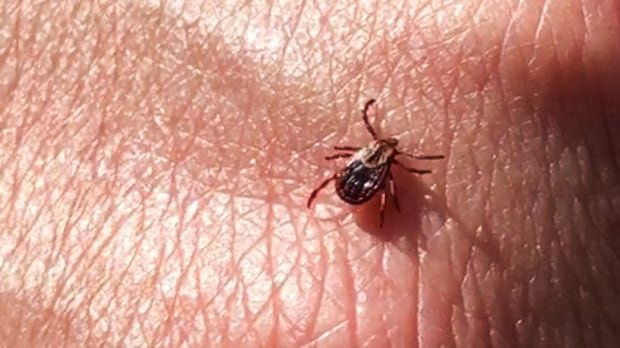

Wellington-Dufferin-Guelph Public Health has issued updated guidance regarding tick encounters, highlighting the importance of conducting tick checks after outdoor activities in temperatures above 0 degrees Celsius. According to Phil Wong, the health unit’s director of operations for health protection, an expanded surveillance program revealed that ticks are not limited to wooded trails but are now found in various locations.
Tick encounters are commonly reported in parks, trails, camping sites, private properties, and among individuals with outdoor occupations. Wong emphasized that ticks are often found in home environments, particularly during activities like gardening or leaf raking. However, he assured that the risk of encountering ticks on playgrounds is minimal, as ticks prefer damp areas and avoid direct sunlight.
The increasing tick population in Canada has prompted health authorities to raise awareness about the potential risks. Health Canada acknowledges over 40 tick species in the country, some of which can transmit diseases. For instance, the Western blacklegged tick is known to spread Lyme disease, while the lone star tick can induce meat allergies.
To address this issue, initiatives such as the Canadian Tick Research and Innovation Centre in Nova Scotia and the G Magnotta Lyme Disease Research Lab in Guelph have been established. Justin Wood, a Lyme disease researcher and founder of Geneticks, emphasized the importance of early detection and intervention for tick-borne illnesses.
Despite concerns about tick activity during winter, experts warn that ticks can survive in leaf litter and undergo hibernation, posing continued risks throughout the year. Public health authorities encourage individuals to report ticks online through dedicated platforms for tracking purposes while emphasizing the importance of outdoor activities with precautionary measures like regular tick checks.