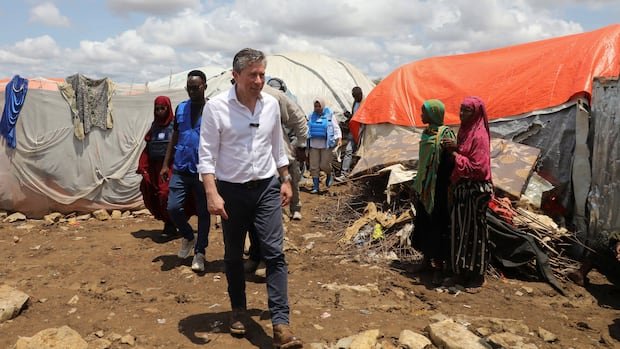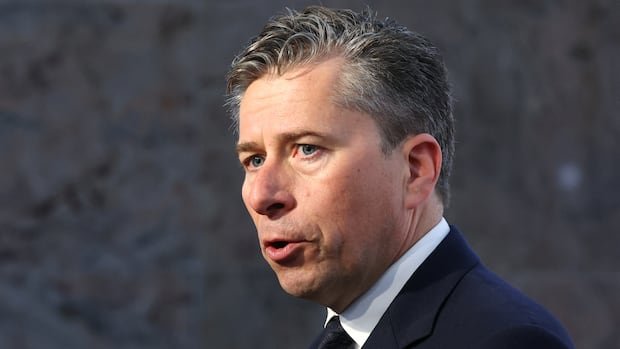


During his current visit to Somalia, Tom Fletcher, the head of the United Nations humanitarian agency, is witnessing the devastating effects of escalating poverty, hunger, and death. He emphasizes that these consequences could have been prevented.
Fletcher highlights that the conflict between the U.S. and Iran, along with the closure of the Strait of Hormuz, is leading to increased food prices, fuel shortages, and hindering the distribution of crucial aid to Somalia.
He points out that the resources spent on the U.S.-Iran war could have saved millions of lives if directed towards humanitarian assistance for the world’s most vulnerable populations.
The United Nations has recently issued a global plea for governments to support its initiative aimed at saving 87 million lives, requiring $23 billion. In contrast, the U.S. expenditure on the Iran war has reached an estimated $25 billion according to Pentagon data.
At an event in London, Fletcher expressed regret, stating that the funds spent on the war could have swiftly covered the humanitarian plan’s costs. However, that opportunity has now been missed.
Fletcher, holding the position of the UN’s undersecretary-general for humanitarian affairs, emergency relief coordinator, and head of the Office for the Coordination of Humanitarian Affairs, shared insights during a recent discussion with host Nil Kӧksal on As It Happens.
Reflecting on your experiences in Somalia so far, what have individuals you’ve engaged with communicated about the challenges they are confronting?
The people in Somalia are grappling with multiple crises concurrently. They are facing the repercussions of climate emergencies, oscillating between droughts and floods, which are having increasingly severe impacts.
Moreover, they are feeling the effects of reduced foreign aid, existing poverty, conflicts, terrorism, and insecurity. Added to these challenges is the fallout from the closure of the Strait of Hormuz, leading to surging food and fuel prices, as well as increased costs of essential agricultural supplies. This situation is compelling people to make heart-wrenching choices about whom to prioritize for assistance.
What insights have surprised you as you witnessed the situation firsthand?
During this visit, I’ve noticed a significant increase in mentions of financial cuts from the people we aim to support. They are not discussing these cuts at a macro level but rather emphasizing the personal impact on individuals.
For instance, a mother seeking medical care for her children now needs to travel longer distances due to these cuts. Furthermore, when she finally reaches a medical facility, there is heightened scrutiny on whether her child will receive necessary nutrition, highlighting the harsh realities faced by families.