

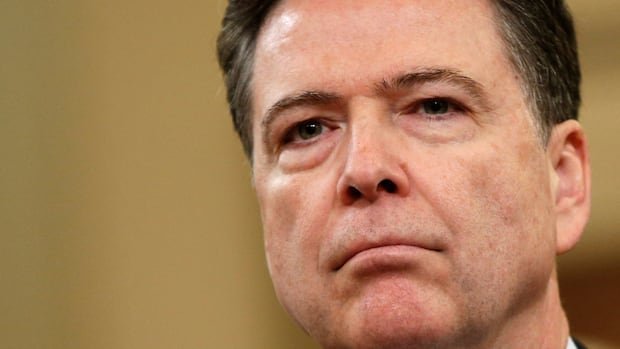

Former FBI director James Comey appeared in court for the first time in a criminal case against him, which legal experts believe will be a tough challenge for the U.S. Justice Department to overcome. Comey faced charges in North Carolina for allegedly threatening President Donald Trump through a social media post showing seashells arranged as “86 47.”
The Justice Department claims that these numbers were a threat to the 47th president, but Comey clarified that he meant it as a political message, not a call for violence. This is the second indictment against Comey, who has a history of conflicts with Trump dating back to his tenure as FBI director.
The initial indictment against Comey for false-statement and obstruction charges was dismissed by a judge last year. Now, prosecutors in the threats case must prove that Comey intended to convey a true threat or at least disregarded the risk that his statement could be seen as threatening.
The case raises First Amendment concerns regarding free speech and the interpretation of political messages. Legal experts suggest that proving Comey’s intent to threaten violence will be challenging due to the ambiguity of the numbers and Comey’s public statements disavowing violence.
Trump, referring to “86” as a “mob term,” believes that it signifies “kill ’em.” However, Comey’s legal team is gearing up to argue that the prosecution is vindictive and selective. Comey made no plea during his court appearance in Virginia, where he resides, and his legal team questioned the necessity of setting conditions on his release.
As the investigation into Russian interference in the 2016 election unfolded, Comey was fired by Trump, leading to ongoing tensions between them. The Supreme Court’s definition of a “true threat” and the protection of hyperbolic political speech play a crucial role in Comey’s case.
The dictionary definition of “86” as slang for various meanings, including “to kill,” adds complexity to interpreting Comey’s post. His swift deletion of the post and disapproval of violence further complicates the prosecution’s argument of intent to threaten.
Legal experts and commentators highlight the constitutional implications of the indictment, emphasizing the need to safeguard free speech rights. Despite criticisms of Comey, the case raises concerns about the potential ramifications on political discourse if such charges are upheld.