

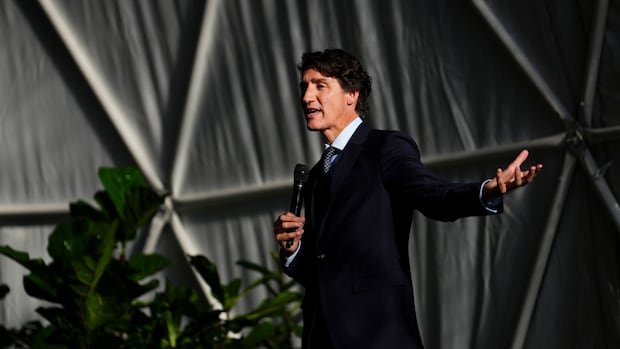

Former Canadian Prime Minister Justin Trudeau has expressed concerns over the impact of U.S. tariffs on Canada’s automotive sector, suggesting that such actions could lead Canada to forge closer relationships with China. Trudeau shared insights during a CNBC event in Singapore, highlighting the past struggles of Canadian aerospace company Bombardier nearly aligning with China due to economic pressures from American companies like Boeing and Airbus.
Trudeau recounted how Bombardier faced challenges with its C-Series jets, as Boeing and Airbus actively hindered Bombardier’s sales efforts by dissuading potential customers from placing orders. This situation eventually led Bombardier to consider partnerships with China as an alternative. Trudeau discussed raising this issue during the 2017 G7 summit with former U.S. President Donald Trump, French President Emmanuel Macron, and then-German Chancellor Angela Merkel, which ultimately resulted in Airbus acquiring a majority stake in Bombardier’s C-Series program.
Drawing parallels to the current scenario, Trudeau highlighted the impact of Trump’s tariffs on Canada’s auto manufacturers, prompting Canada to explore potential collaborations with China in the automotive industry. Trudeau referenced Canada’s imposition of 100% tariffs on Chinese-made electric vehicles in 2024 in response to unfair trade practices, mirroring similar actions taken by the U.S. In 2025, Trump retaliated by imposing harsh duties on the Canadian auto sector.
Trudeau noted that following a meeting with Chinese President Xi Jinping, Prime Minister Mark Carney secured tariff concessions for Canadian agricultural sectors in exchange for allowing a quota of Chinese electric vehicles into the country at a reduced tariff rate. Trudeau emphasized the detrimental effects of competitive practices between nations, asserting that aligning with countries that do not share common values poses risks to Canada’s economic interests.
In conclusion, Trudeau cautioned against the negative implications of hostility in international trade relations, citing the necessity for Canada to consider alternative partnerships, such as with China, in response to challenges posed by U.S. trade policies impacting the Canadian automotive sector.