

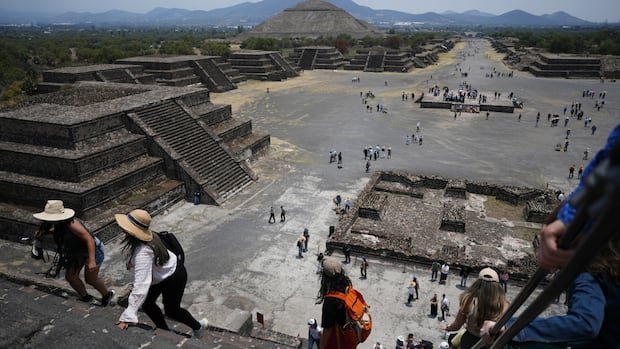

Mexican authorities have handed over the body of a Canadian tourist who was fatally shot by a gunman at one of Mexico’s popular pyramids to the victim’s family. The woman’s family visited the regional office in Texcoco, where her body was returned to them following the necessary identification procedures, as confirmed by the attorney general’s office for Mexico state. The victim, whose identity remains undisclosed, was the sole fatality in the shooting incident that occurred on Monday.
While Mexican legislation prohibits revealing personal information of crime victims to safeguard their privacy, federal officials in Mexico disclosed the identities of the injured tourists and the hospitals where they received treatment after the shooting. Among the injured individuals was a Canadian woman, Delicia Li de Yong, who sustained a gunshot wound above her right shoulder blade and was identified by the Security Cabinet of Mexico.
In addition to the Canadian victim, tourists from the United States, Colombia, Brazil, and Russia were also injured, including a six-year-old Colombian boy. Global Affairs Canada stated that consular assistance is being provided to the Canadian victim’s family, with no further details shared in accordance with privacy regulations.
Authorities in Mexico have suggested that the shooter, Julio César Jasso Ramirez, meticulously planned the attack at the Teotihuacán pyramids, exhibiting erratic behavior, expressing disdain for tourists, and firing indiscriminately as visitors sought safety. The gunman, a 27-year-old Mexican citizen, ultimately took his own life at the scene.
The incident, which officials believe was premeditated, has sparked calls for enhanced security measures at archaeological sites to prevent firearms from being brought in. Mexican President Claudia Sheinbaum emphasized the importance of implementing protocols to avert similar tragedies, particularly at iconic sites like the Teotihuacán pyramids, a renowned UNESCO World Heritage Site and a significant tourist attraction in Mexico. Last year, the site welcomed over 1.8 million international visitors, underscoring its cultural and historical significance.