

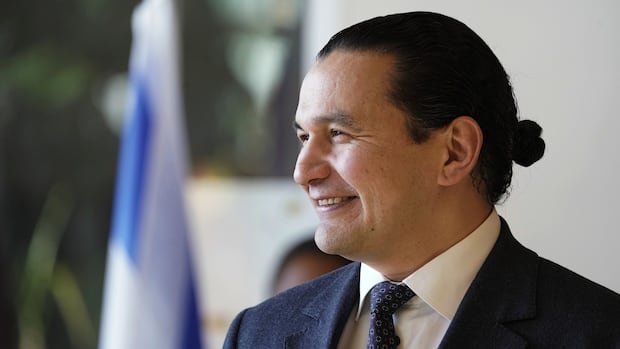

Manitoba’s premier is edging closer to eliminating the seasonal time changes, potentially introducing a “Prairie time zone” believed to have positive business implications. Wab Kinew, after previously indicating a delay, now hints at an imminent decision within the year to maintain a consistent time zone throughout the year, aligning with other regions to the west and north.
Expressing confidence in Manitoba’s move away from bi-annual clock adjustments, Premier Kinew conveyed uncertainty between opting for permanent daylight time or standard time. Currently, Manitoba follows central standard time from November to March and daylight time for the remaining months.
Recent announcements from Alberta and the Northwest Territories to transition to daylight time follow British Columbia’s decision to permanently adopt daylight saving time. Saskatchewan, having adopted permanent central standard time long ago, now contemplates adjustments due to Alberta’s plans.
Previously prioritizing other matters, Kinew shifted focus back to the time change discussion, highlighting the importance of public sentiment in determining the preferred time standard. The premier anticipates a decision by the end of the year, emphasizing potential economic advantages in synchronizing time zones with Saskatchewan and Alberta.
Supporting the adoption of standard time for health benefits, Kinew faces the dilemma of choosing between health-conscious standard time and the public’s preference for extended evening daylight. Noting health risks associated with extended daylight in the evening, experts advocate for maintaining standard time.
Kinew plans to assess public interest, raise awareness of health benefits, and gauge public preference before reaching a conclusive decision. The Premier envisions economic benefits from a unified time zone among Manitoba, Saskatchewan, and Alberta, potentially enhancing interprovincial trade.
Daylight saving time’s historical origins date back to World War I, aimed at conserving energy by extending daylight into the evening. Despite reduced energy savings today, the tradition persists due to public preference for longer summer evenings. Recent movements to abolish time changes stem from public discontent, amplified by online connectivity.
As the trend towards eliminating time changes gains momentum in Canada, Kinew’s proposal for a “Prairie time zone” resonates with the ongoing shift towards uniform time standards in various provinces.