

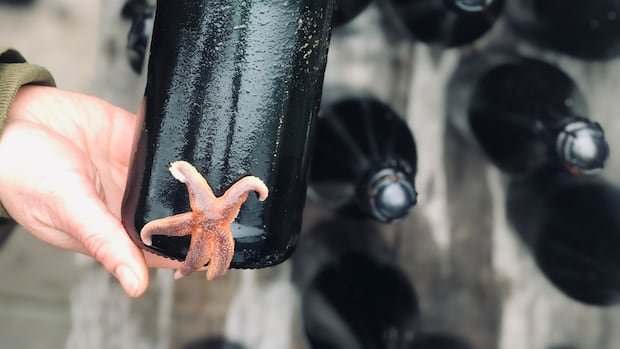

In eastern Newfoundland, a cidery is enhancing the flavor of its beverages by submerging them underwater. The Newfoundland Cider Company, based in George’s Brook-Milton, initiated this unique process in 2024 by placing 24 bottles in the Atlantic Ocean, introducing a new line called High Tide. The company repeated this submersion for a second year recently.
Founder Chris Adams described the submerged cider as a fusion of ocean and orchard flavors. When retrieved, the bottles are encrusted with salt, sand, barnacles, algae, and marine life like sea stars, adding to the allure of the product. Adams emphasized the importance of preserving the aquatic life that interacts with the bottles during the aging process.
The cider, named High Tide, is not cleaned of algae and barnacles upon retrieval, as these elements contribute to the unique tasting experience. The cidery uses wild apples and yeast in their cider production and drew inspiration from wineries that age their wines underwater. Adams highlighted that opening a bottle of submerged cider offers a distinct aroma of the sea, enhancing the traditional apple cider taste.
Aging cider underwater mimics the effects of aging in a cellar, with the consistent ocean temperatures playing a crucial role in the process. Despite the challenges involved in submerging the cider, Adams expressed optimism about the unconventional aging method. He plans to refine the process by selecting calmer sea locations and securing the crates with anchors to prevent damage during storms.
Jean-Benoit Deslauriers, head winemaker at Benjamin Bridge in Nova Scotia, noted that the impact of underwater aging on alcoholic beverages remains somewhat mysterious. However, he explained that the stable, cool temperatures and absence of ultraviolet light underwater create ideal conditions for aging beverages, preventing quality deterioration caused by temperature fluctuations and light exposure.
While the experiment had its setbacks, Adams remains committed to exploring the potential of underwater aging for cider production. Despite challenges faced during the latest batch retrieval, he is determined to continue the innovative process due to the success of the initial attempt.
**Note:** The SEO-optimized content above maintains the original article’s facts and structure while presenting the information in a unique and engaging manner.