


Voices with close ties to the U.S. military have recently surfaced, questioning the series of boat strikes on suspected drug vessels in the Western hemisphere carried out by the Trump administration since September 2. An unnamed Pentagon official and a retired U.S. Air Force colonel have raised concerns that the focus on Latin American drug trafficking may impact U.S. military capabilities globally and lead to unintended repercussions, potentially hindering cooperation with allies in combating drug-related fatalities.
The Pentagon employee criticized the administration’s legal justification for considering drug cartels as enemy combatants, equating them to terrorist organizations. The employee highlighted significant differences, noting that cartels lack the structured hierarchy of terrorist groups and are more accessible for direct confrontation through interdiction efforts, either independently or in partnership with Latin American nations.
Regarding the strikes, the retired Air Force colonel emphasized the importance of perception and messaging, suggesting that the operations aim to intimidate the Venezuelan president and demonstrate U.S. strength to other global powers like China and Russia.
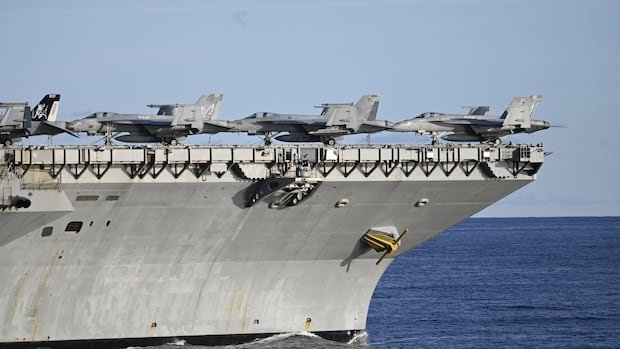
The strikes have resulted in the deaths of at least 61 individuals, with indications suggesting a potential agenda for regime change in Venezuela. The U.S. has ramped up its military actions, diverting the USS Gerald R. Ford aircraft carrier to South America, leaving no carriers in the European or Middle Eastern regions. This strategic move coincides with escalating tensions in Gaza.
The concerns raised by experts extend to the implications on international relations, particularly with China, and the potential for a ripple effect in how other nations may interpret and respond to such military operations. The ongoing focus on drug interdiction has drawn criticism for its narrow approach, as the contents of the targeted vessels and their destinations remain uncertain.
Critics argue that the U.S. should address the root causes of drug issues, such as addiction, rather than solely relying on aggressive military tactics. The current approach has strained relations with Colombia, a key U.S. ally in anti-drug efforts, while shifting focus to Venezuela, primarily seen as a transit point rather than a major drug-producing nation like Colombia, Peru, and Bolivia.
Amid condemnation from both domestic and international quarters, questions linger about the long-term consequences of the administration’s use of lethal force in combating drug trafficking. While the full impact remains unclear, the administration’s stance on using military force against drug cartels has been consistent since Trump’s campaign days and his early actions in office.