

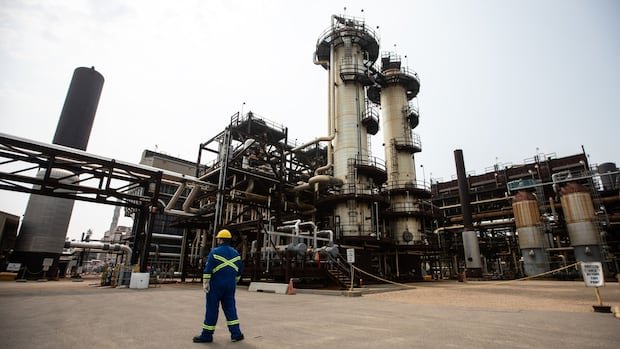

Representatives in the Canadian oil and gas industry argue that implementing an industrial carbon levy would diminish the nation’s competitive advantage in a time when global demand for a dependable energy supply is rising.
Lisa Baiton, the leader of the Canadian Association of Petroleum Producers, emphasized that Canada stands alone in imposing an industrial carbon tax on its producers, unlike other oil-producing and exporting countries.
With ongoing conflicts in the Middle East highlighting the urgency of energy security, Baiton stressed that Canada, possessing vast oil and gas reserves, has both the opportunity and duty to develop them for the benefit of global energy stability.
She lamented the current focus on cost-increasing measures instead of seizing the opportunity to enhance competitiveness and fulfill the responsibility to contribute to global energy security.
The discussion unfolds against a backdrop of efforts in Canada to expedite the development of oil and gas export infrastructure to diversify markets beyond the country’s primary customer, the United States.
Focus on Pipelines
The government of Alberta intends to submit an application for a new crude oil pipeline to the federal major projects office this summer, aiming to accelerate the construction of critical infrastructure deemed vital for national interests.
A comprehensive agreement inked late last year between Alberta and the federal government covers various energy issues, including plans for a new pipeline in British Columbia alongside an industrial carbon price that would bolster the viability of the significant Pathways carbon capture initiative.
However, specific details regarding the carbon price and Pathways components remain unresolved beyond the April 1 deadline stipulated in the energy accord.
As per the agreement, Alberta’s industrial carbon price is slated to rise to $130 per tonne from the current $95, with ongoing discussions to determine the pace of this increase, revealed Premier Danielle Smith in late March.
An analysis by Clean Prosperity indicated that oilsands producers could recoup additional carbon expenses through higher product prices resulting from increased exports to Asia. The study projected a net profit increase exceeding $3 billion over 15 years post the new pipeline’s launch.
Another study by the Canadian Climate Institute estimated that the impact of the heightened carbon price per barrel would be around 50 cents, similar to the cost of a Timbit.
Competitive Challenges
Jon McKenzie, CEO of Cenovus Energy and Chairman of CAPP’s board of directors, dismissed the notion that a carbon levy would incentivize industry decarbonization efforts, warning that it would lead to a decline in Canada’s global market share.
He emphasized that the carbon levy only adds to operational costs, reducing Canada’s competitiveness on the global stage.
Chris Carlsen, CEO of Birchcliff Energy Ltd., highlighted the company’s limited options to further reduce emissions, citing their advanced technology and relatively new facilities. He emphasized