

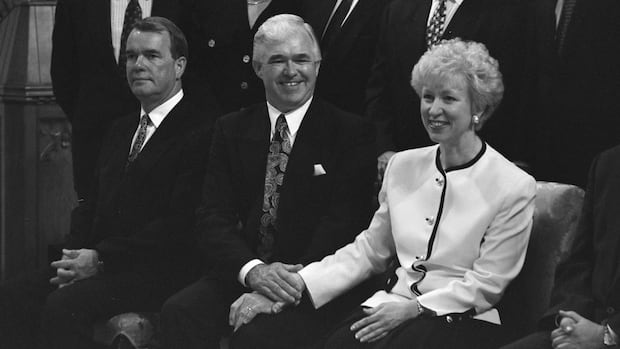

Tom Siddon, who was a cabinet minister under Prime Minister Brian Mulroney during the Oka Crisis and later played a pivotal role in the establishment of Nunavut, has passed away at the age of 84.
His daughter, Katie Siddon Karn, announced his passing on social media on Sunday. Siddon, along with his wife Pat, raised five children.
Siddon Karn shared that her father, who hailed from Alberta, “stumbled” into the realm of politics in the 1970s after voicing his opinions at a public hearing.
“My dad, known for his strong opinions and remarkable intelligence, had a unique talent for fostering dialogue and achieving consensus,” she stated.
Siddon initiated his political journey as a councillor in Richmond, B.C., and subsequently secured a seat in Parliament five times between 1978 and 1993.
-
Oka Crisis deepened understanding of land claims in Canada
-
Oka Crisis: 5 films that shed light on the events
Throughout his tenure, he held various cabinet positions, including Minister of Defence and Minister of Fisheries and Oceans.
Siddon Karn noted that one of her father’s most significant achievements was his role in securing the Nunavut Land Settlement Agreement, which essentially established Nunavut on the map.
Helena Konanz, the Conservative MP for Similkameen-South Okanagan-West Kootenay, expressed in a social media message that Siddon was both a friend and mentor. He was always willing to share his wisdom and guidance and was committed to improving Canada, she remarked.
Former aide Bob Ransford described Siddon as “extremely brilliant.”
“He was largely free of cynicism. An optimist at heart, he loved our country and cared deeply for its people. He was brimming with ideas about Canada taking on significant challenges and had a strong belief in the power of education,” Ransford added.
1990 Oka Crisis
Siddon held the position of Minister of Indian Affairs during the 1990 Oka Crisis, which originated from a protest against the expansion of a golf course onto a sacred Kanien’kehá:ka, or Mohawk, burial ground in Kanesatake, situated northwest of Montreal.
Mohawk Warriors erected barricades to block access to the site. In July 1990, Quebec provincial police attempted to disperse the protesters using tear gas and concussion grenades, which led to a shootout resulting in the death of police corporal Marcel Lemay. A coroner’s inquest was unable to ascertain who fired the lethal shot.
The Canadian Armed Forces later deployed to the area with armored vehicles, helicopters, and barbed wire. Negotiations eventually resolved the standoff after 78 days, concluding in late September.
The response to the crisis incurred an estimated cost of $200 million and involved 4,000 Canadian soldiers.
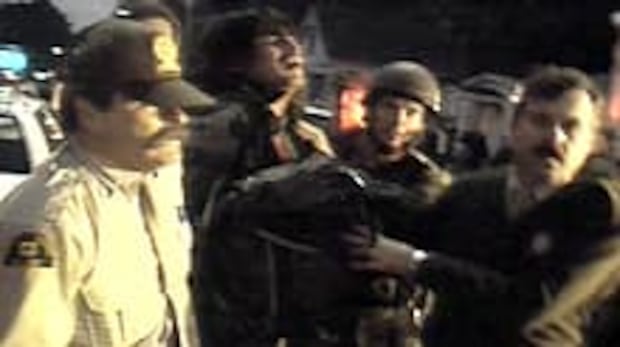
After 78 days, the Mohawks decide to put down their weapons. Aired Sept. 26, 1990 on CBC’s The National.
In 1995, Quebec’s coroner issued a report stating that Siddon allowed the situation to escalate by not engaging with community members who sought to meet with him in Ottawa, labeling the federal government’s delayed response as “inexcusable.”
Siddon defended the government’s actions throughout the years.
In a 2015 interview with The Canadian Press, he remarked that the standoff was crucial in addressing the complicated topic of land claims.
“I believe we made significant advancements, and I hold that Oka was a key turning point in our national history,” he stated.
The crisis instigated the Royal Commission on Aboriginal Peoples and facilitated new agreements, including resource-sharing arrangements with Indigenous communities. A federal report later characterized Oka as an avoidable tragedy.
After his defeat in the 1993 election, Siddon remained active in political matters. In 2012, he and other former fisheries ministers penned an open letter to Stephen Harper’s government, cautioning that proposed changes to the Fisheries Act would undermine habitat protection measures.