



Beneath the trees in Camp Hill Cemetery, Halifax, a stone grave marker is level with the soil, covered in dirt and surrounded by dandelions.
It features a compelling inscription: “Jennie Dill, 1897-1942. Wife of Sgt. W.T. Tarbox. Renowned Hiker from Coast to Coast. Gone but not forgotten.”
Yet, her narrative has mostly faded from memory.
On this day, exactly 105 years ago, June 14, Jennie Dill and her spouse, Frank, reached Vancouver following a challenging walk across the country. She made history as the first woman to traverse Canada on foot.
This remarkable achievement propelled Jennie Dill into the spotlight as one of Canada’s most celebrated women.
Enthusiastic crowds gathered to welcome the couple along their route; they received accolades from lawmakers, and newspapers eagerly reported on their adventure.
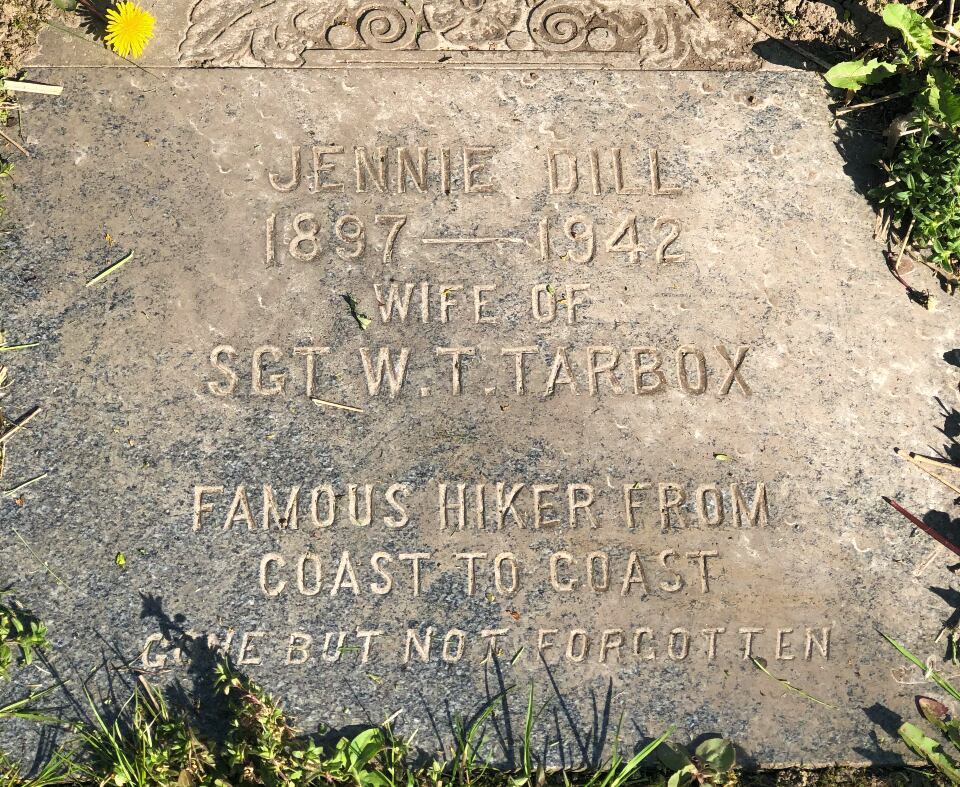
Jennie Dill’s grave marker in Camp Hill Cemetery, Halifax. (Vernon Ramesar/CBC)
Currently, her grave marker stands as one of the few remnants of the 1921 race from Halifax to Vancouver that captivated the public and was later forgotten.
In 1921, Canada was grappling with an economic downturn following World War I. With job opportunities limited and youth unemployment on the rise, the Halifax Herald published an editorial expressing concern that young people were becoming “soft,” emphasizing that physical activity was essential for success.
Charles Burkman, an amateur athlete, declared he would walk from Halifax to Vancouver to demonstrate that Atlantic Canadians still possessed resilience. The Herald embraced the idea and promoted it extensively.
What began as a solo journey evolved into a competitive race when two additional teams joined. Jack and Clifford Behan, a father-son duo from Dartmouth and both war veterans, announced their participation.
By late January, Frank and Jennie Dill made the decision to join in.
Frank, a former competitive runner from Windsor, N.S., had served in the Canadian Ordnance Corps. Jennie, his wife for two years, was a 23-year-old from Bayers Settlement who, according to the Herald, enjoyed skating, hunting, and fishing.
At the time of the race, the couple resided in Dartmouth, N.S.
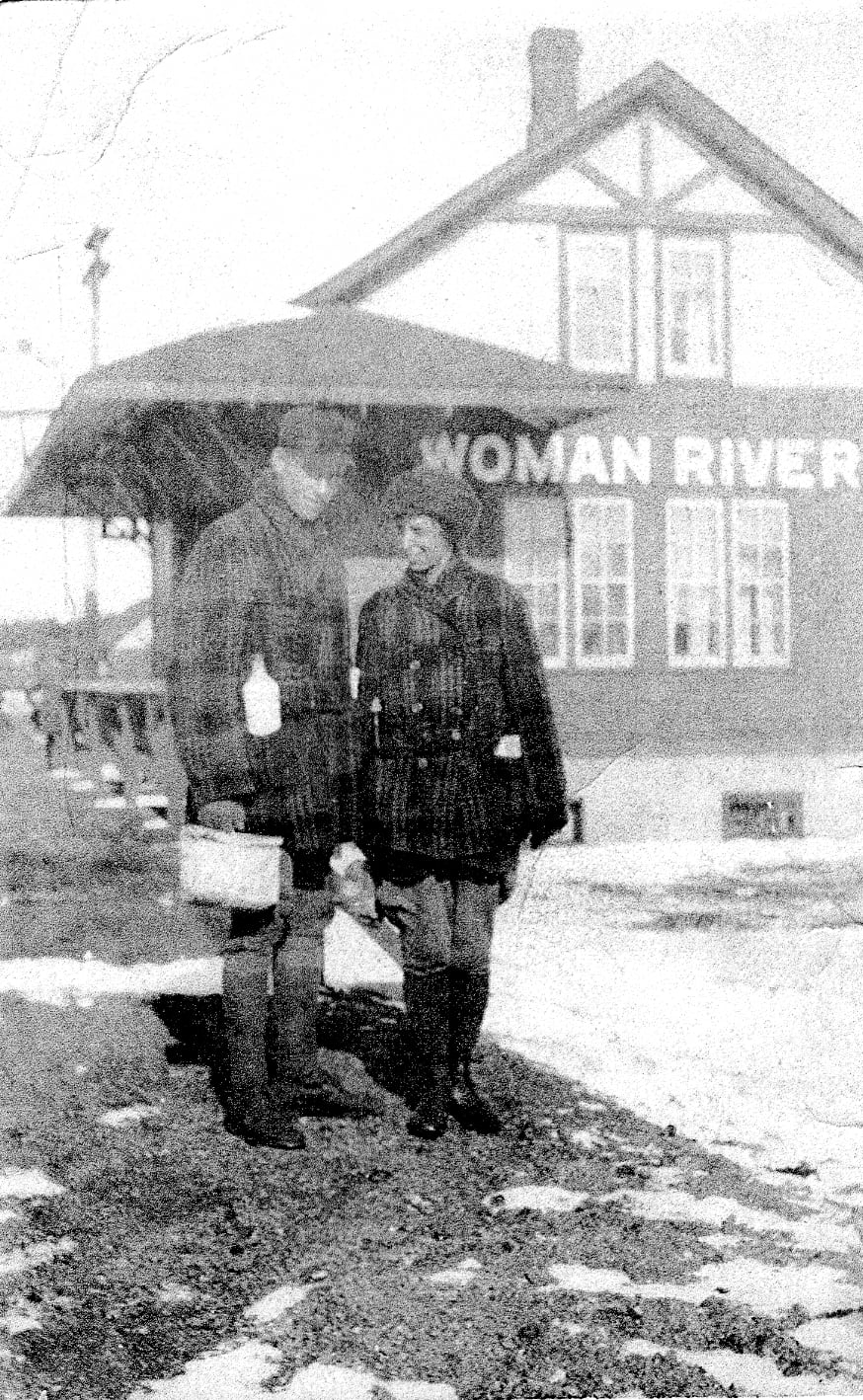
A Halifax Herald photograph from 1921 shows Frank and Jennie Dill on their journey across Canada. (Halifax Herald)
The Dills quickly became the most favored contestants. A retrospective in Maclean’s magazine from 1956 described the scene as they began their journey.
“Two thousand people gathered in front of the Halifax Herald building to witness the couple’s departure,” it stated.
“Dressed in riding breeches, high leather boots, and a mackinaw jacket and cap, Jennie caused quite a stir. In 1921, it was unusual for women to be seen in men’s attire.”
During this period, Canada’s roadways consisted mainly of unpaved, disconnected routes, prompting the hikers to follow the Canadian Pacific Railway tracks. They navigated along wooden ties for thousands of kilometers through blizzards, freezing temperatures, and the remote wilderness of northern Ontario and the Rocky Mountains.
They depended on railway station workers, church groups, and local mayors for warm meals and accommodations.
Upon reaching Ottawa in March, the couple received a warm welcome. Nova Scotia politicians and their spouses vied to ensure the Dills had a memorable experience.
Wolf encounter
After departing from the capital, the Dills faced a less friendly encounter in Ontario when they came across a wolf.
In her book The Amazing Foot Race of 1921, Shirley Jean Roll Tucker references Jennie Dill’s account of the encounter to the Herald.
“As we walked along the track, we suddenly heard the baying of an animal about a hundred yards behind us, and before we knew it, a large timber wolf lunged at Frank,” Jennie Dill recounted.
“I pulled a revolver from my belt and shot. The bullet halted the wolf, and Frank dispatched it moments later with his .35-calibre pistol.”
The Dills arrived in Vancouver in June 1921. They had left Halifax a week after the Behans but completed their journey quicker, finishing in 134 days.
The grand prize was $500, sufficient to purchase a new Ford Model T.
However, their fame was fleeting. The couple returned to Nova Scotia and settled near Jennie’s family in Bayers Settlement.
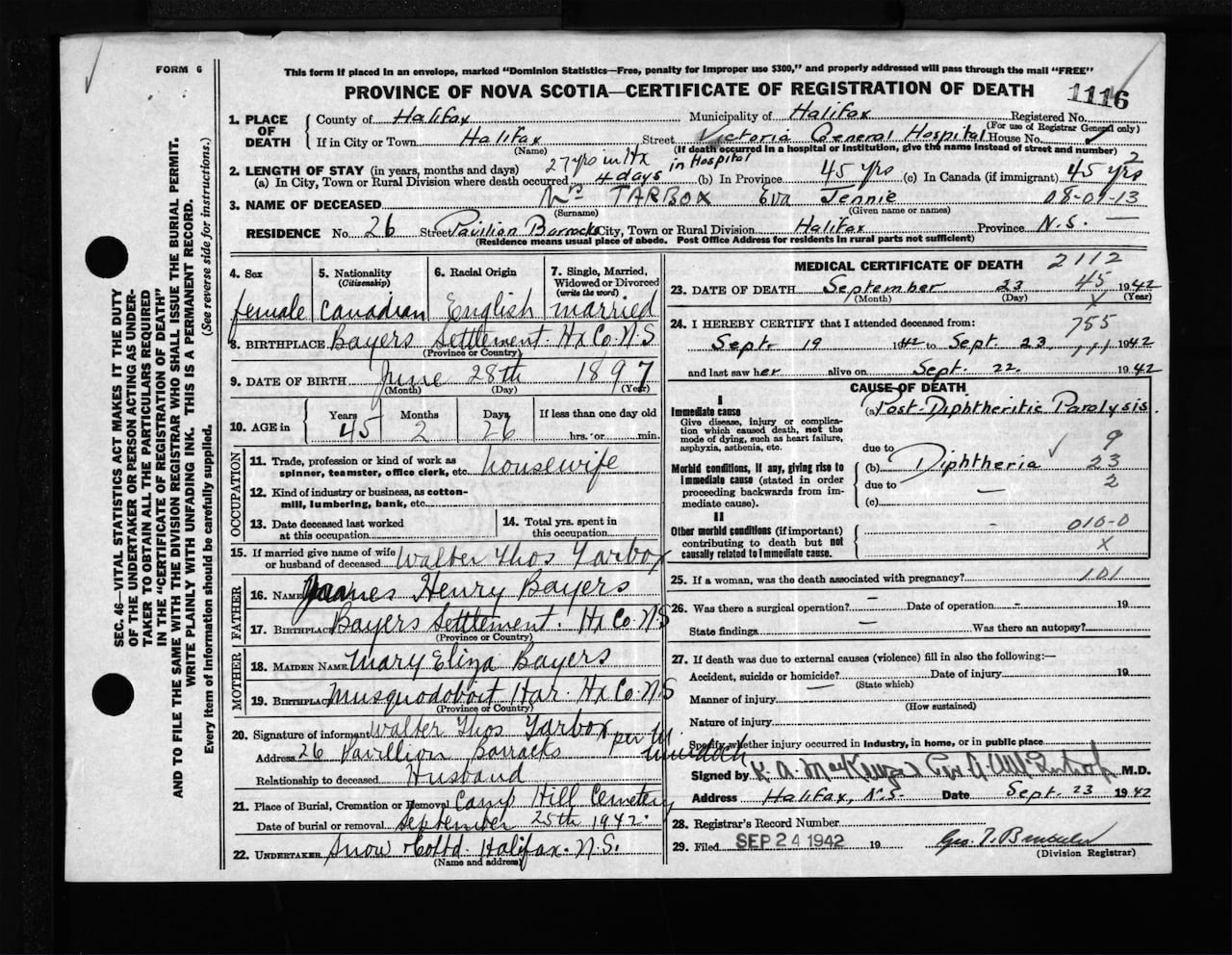
Jennie Dill’s death certificate shows she died at Victoria General Hospital in Halifax of post-diphtheritic paralysis. (Nova Scotia Archives)
On May 31, 1927, she gave birth to a stillborn daughter, Bessie Geraldine.
Frank passed away on May 24, 1929, at the age of 36. He contracted tuberculosis while stationed in France during the war. His death certificate indicated that he had been battling the disease for ten years, meaning he undertook the cross-country walk while suffering from it.
Jennie later remarried, becoming the spouse of Sgt. Walter Thomas Tarbox, with whom she had one child, Eva Grace.
On September 23, 1942, she succumbed to diphtheria at the age of 45.
Her gravestone features her well-known first married name—likely a conscious decision to maintain her identity as the woman who inspired the nation. She was laid to rest beside her first husband in Camp Hill Cemetery.
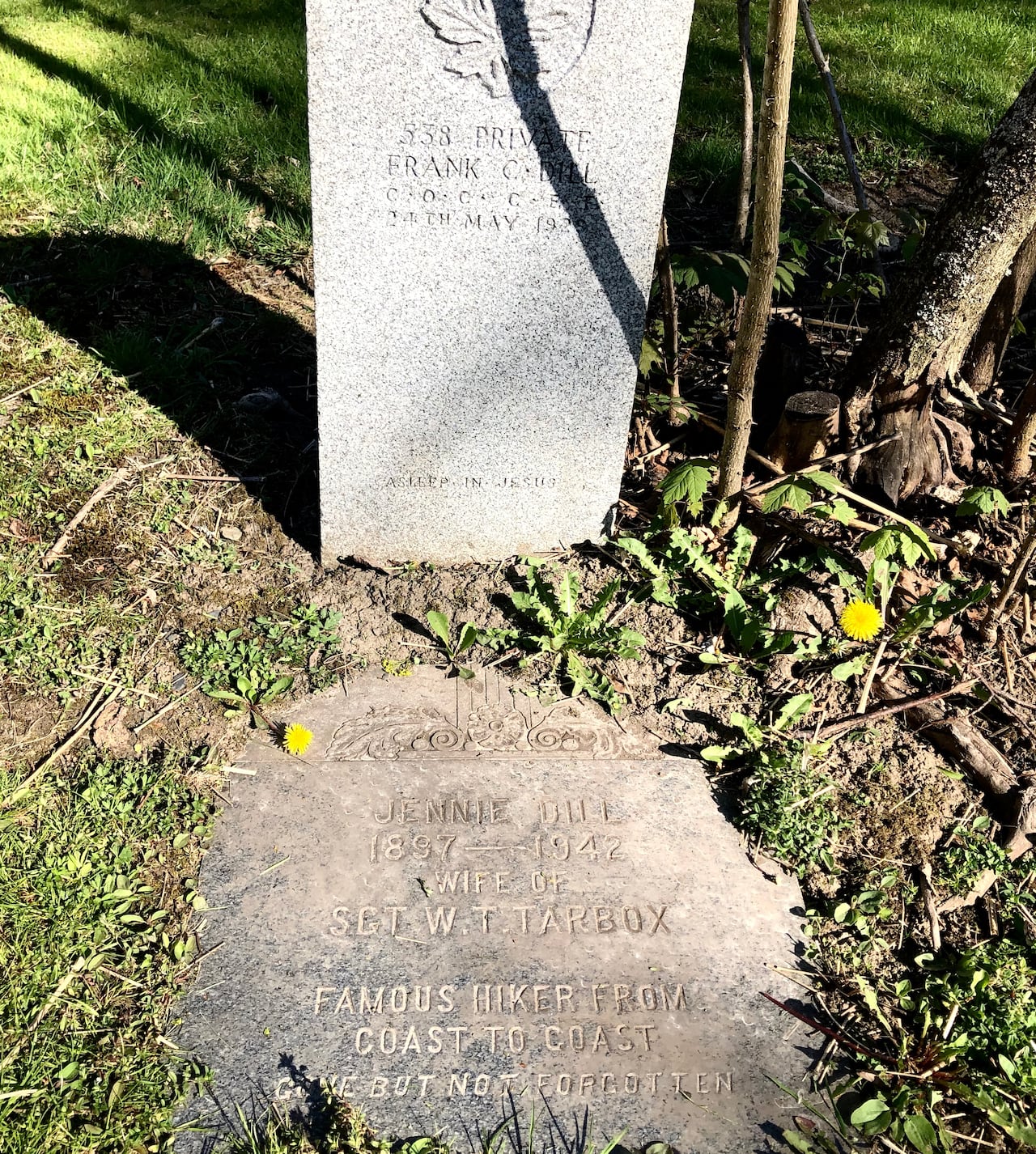
Jennie Dill is buried next to her first husband, Frank Dill, in Camp Hill Cemetery, Halifax. (Vernon Ramesar/CBC)
Each day, visitors to the cemetery pass her grave, often unaware of the pioneering figure she was.
Although she initially entered the race alongside Frank as a lighthearted challenge, Dill recognized that being the only woman competing sent a significant message.
Women had only recently gained the right to vote in federal and Nova Scotia elections.
Tucker cites a telegram from Dill to the Herald as she and Frank approached the outskirts of Vancouver.
“I was reflecting today on those who scoffed at us when we left Halifax last winter: He who laughs last, laughs best,” Dill wrote.
“I believe I have demonstrated that a woman can accomplish any athletic feat that a man can.”
MORE TOP STORIES
-
Canada’s newest destroyer carries on legacy of warship lost in 1940 tragedy
-
Reopened trail to popular Cape Breton waterfall lacks mobility access, leaving veteran disappointed
-
Voters urged to get engaged in newly created Acadian riding in northern Cape Breton
-
Black women in Canada are facing a mental health crisis. This clinic is trying to help
-
New Canada Post stamp celebrates Halifax 2SLGBTQ+ history