

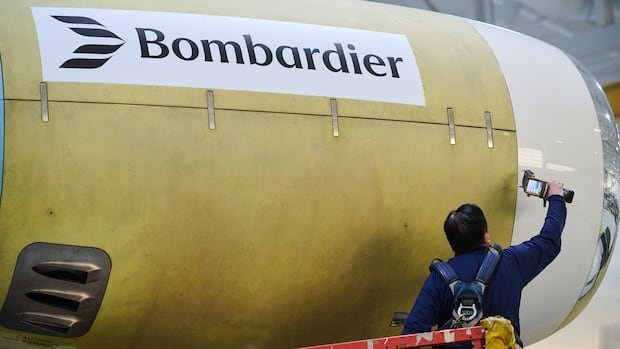

U.S. President Donald Trump has retracted his previous warning to prohibit the sale of Bombardier planes in the United States, easing tensions in the aerospace industry following recent trade war escalations.
During a campaign rally on Monday night, Trump expressed a shift in his perception of Bombardier, acknowledging the company’s presence in the U.S. He assured the crowd in a Kansas suburb, where Bombardier has 1,500 employees, that he would support the company and its workforce.
The city of Wichita is home to Bombardier’s defense division, employing approximately 3,500 American workers in various states, including Kansas, Texas, and California.
Trump’s decision to rescind the threat against Bombardier came after a phone call from Kansas Republican Sen. Roger Marshall, who is in a tight race against Democrat Adam Hamilton for Senate control in the upcoming midterm elections.
Bombardier emphasized its significant contributions to the U.S. economy, highlighting its substantial investments and support for American jobs. The company underscored its commitment to fostering skilled employment opportunities through initiatives like the newly established North American Learning Center in Wichita.
Despite previous tensions, Bombardier continues to play a vital role in both the Canadian and U.S. markets, with a substantial portion of its revenue coming from American clientele. The company’s positive outlook was reflected in the stock market, with Bombardier shares rising by 4.5% following Trump’s announcement.
The aerospace industry’s interconnectedness across North America underscores the potential repercussions of blocking a major manufacturer like Bombardier from the market. Analysts point out that such a move would not only impact American parts suppliers but also disrupt operations for U.S. jet fleet operators awaiting Bombardier deliveries.
Trump’s reversal on the Bombardier issue coincided with Ottawa’s imposition of retaliatory tariffs on American goods, further highlighting the complex trade dynamics between the two countries. This recent development marks the second instance this year where Bombardier has faced scrutiny from the U.S. president, underscoring the ongoing trade tensions between the U.S. and Canada.