


The federal government has declared its dedication to backing British Columbia’s forestry industry amid U.S. import tariffs, unveiling a fresh $12 million fund for assistance. Despite this initiative, many affected individuals feel the current aid falls short.
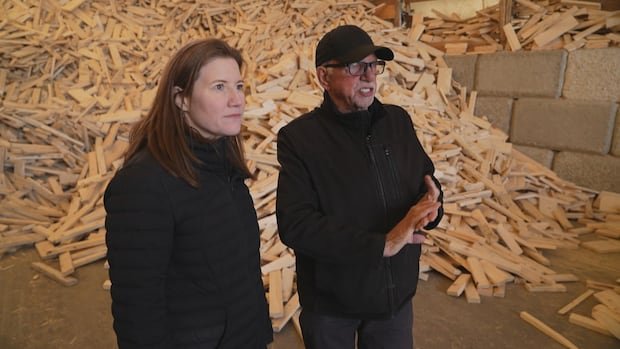
John Brink, who has witnessed a significant reduction in his workforce at multiple wood manufacturing facilities in the Prince George region, criticized the support as insufficient. Expressing his frustration, Brink emphasized his challenges in accessing the announced assistance.
The announcement of the $12 million fund by Federal Natural Resources Minister Tim Hodgson during a visit to a sawmill in Richmond prompted Brink’s disapproval. The fund aims to prioritize 14 projects geared towards diversifying Canadian wood production to reduce dependence on the United States, which has imposed steep tariffs exceeding 35 percent on Canadian softwood.
These tariffs, coupled with other factors, have severely impacted the industry, resulting in numerous job losses and the closure or reduction of operations at numerous mills and plants across British Columbia. The federal government’s recent $1 billion loan program to aid the steel, aluminum, and copper industries raised concerns from B.C. Premier David Eby about the government’s understanding of the crisis in the province.
Despite initial skepticism, Eby appeared alongside Hodgson at a recent event and expressed confidence in the promised support for the forestry sector. Brian Hawrysh, CEO of B.C. Wood, shared his optimism for forthcoming comprehensive relief measures.
Hodgson highlighted the government’s previous commitment of $2.5 billion to support the forestry sector, including allocations for softwood lumber loan guarantees, tariff loans, and funding for wood-based building projects and Indigenous-led initiatives.
Both federal and provincial authorities have expressed a commitment to collaborating on transforming the forestry sector. While acknowledging the latest investments as a positive step, Forests Minister Ravi Parmar urged the federal government to match its commitment to other sectors.
Despite these efforts, Brink remains dissatisfied with the level of assistance received, emphasizing the urgent need for more substantial support to sustain his business.