

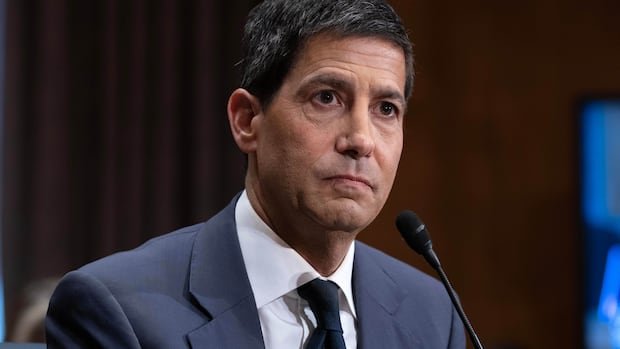

The United States Senate has officially approved Kevin Warsh as the new head of the Federal Reserve, nominated by President Donald Trump. This decision brings a change in leadership to the central bank amid challenging times for the global economy.
Warsh’s confirmation as chair occurred with a primarily partisan vote. Recent uncertainty surrounded his nomination following objections from Republican Senator Thom Tillis, who had linked it to an investigation involving the current chair, Jerome Powell. However, the investigation was closed in April, paving the way for Warsh’s confirmation.
Senate Majority Leader John Thune emphasized the importance of having a Federal Reserve chair who comprehends both macro and microeconomics, particularly focusing on the impact on hardworking Americans, their jobs, and livelihoods. Thune endorsed Warsh for possessing these qualities.
Kevin Warsh, aged 56 and a former senior Federal Reserve official, assumes leadership during a challenging period for the agency. Inflation has surpassed the Fed’s target for five years, with a recent surge driven by escalating gas prices. The Federal Reserve’s interest rate policy committee faces internal divisions, with a notable increase in dissenting votes last month. Despite facing personal attacks from Trump and a Justice Department investigation, Powell intends to remain on the Federal Reserve board beyond his tenure as chair, potentially creating a dual power structure.
President Trump has been vocal about his desire for change within the Federal Reserve, criticizing Powell for not reducing interest rates. Trump’s actions, including attempting to dismiss Fed governor Lisa Cook and investigating Powell over a building renovation, have raised concerns about the central bank’s independence.
Warsh, during his confirmation hearing, faced skepticism from Democratic Senator Elizabeth Warren, who labeled him a “sock puppet” for Trump. Warsh denied being pressured by Trump to adjust interest rates and emphasized his commitment to acting independently if appointed as chair.
Warsh has been critical of the Federal Reserve’s recent performance, particularly regarding the significant inflation surge in 2021-22. He advocates for reforming the Fed’s communication strategies, proposing limitations to enhance operational flexibility.
Senate Democrats have criticized Warsh for lack of transparency regarding his substantial wealth, estimated at a minimum of $100 million US. Warsh pledged to divest all relevant assets within 90 days of assuming office.
The Federal Reserve faces challenges in responding to the 50% rise in gas prices due to the Iran conflict, leading to increased inflation. Maintaining price stability is a key mandate for the Fed, achieved through adjustments in short-term rates to regulate borrowing and spending.
As the Fed assesses the impact of the gas price surge, the recent dissent within the rate-setting committee signals potential hurdles for Warsh in implementing rate adjustments. Many analysts view these dissents as a cautionary message to Warsh regarding the complexity of rate policy changes.