

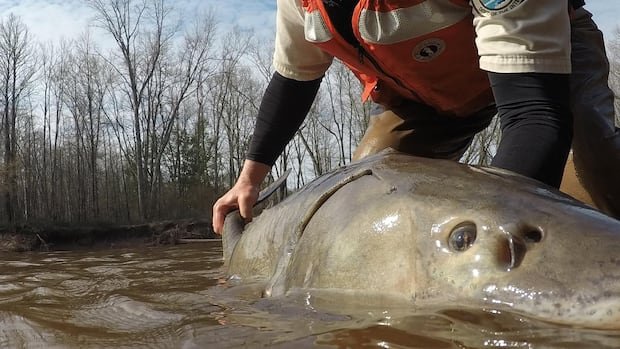

Lake sturgeon in the Great Lakes may be much older than previously believed, with some potentially living over 400 years, as per new research findings. Despite their impressive longevity and size, these ancient-looking fish are facing endangerment, particularly in the Great Lakes region, where they are listed as a species at risk in Ontario.
Historically, the lake sturgeon population suffered a severe decline due to overfishing and habitat destruction, leading to a drastic reduction in numbers. Efforts to help these fish recover involve human intervention, such as raising and releasing young sturgeon into the wild.
A recent study conducted by Ed Baker, a fisheries scientist from the Michigan Department of Natural Resources, utilized over four decades of data on captured lake sturgeon to determine their potential lifespan. The research challenges previous estimates of sturgeon longevity, suggesting that these fish may live far longer than initially thought.
Unlike traditional methods of aging sturgeon based on growth rings, the study analyzed growth rates over time to estimate the age of individual sturgeon. Surprisingly, some sturgeon were found to have growth patterns indicating potential lifespans spanning centuries.
This discovery poses significant implications for sturgeon conservation efforts, prompting a reevaluation of existing preservation strategies. Trevor Pitcher, a biologist at the University of Windsor, emphasized the need to adapt conservation plans to accommodate the extended lifespan of sturgeon, potentially lasting hundreds of years.
The critical role of sturgeon in the ecosystem, including their impact on controlling invasive species like quagga mussels and gobies, highlights the importance of preserving these ancient fish. Efforts to restore sturgeon populations involve collaborative initiatives, such as training programs to raise sturgeon in various regions around the Great Lakes.
From a cultural perspective, lake sturgeon hold spiritual significance for indigenous communities like the Anishinaabe, symbolizing wisdom and longevity. Perry McLeod-Shabogesic, an elder from the Nipissing First Nation, emphasized the revered status of sturgeon as “elder fish” in their traditions, representing a connection to ancient knowledge and respect for nature.
Overall, the revelation of the potential centuries-long lifespan of lake sturgeon underscores the importance of reevaluating conservation strategies and acknowledging the cultural significance of these remarkable creatures in the Great Lakes ecosystem.